Why gutters matter
Gutters and downpipes carry rainwater from the roof away from the walls and foundations. When leaves, moss, silt and the occasional tennis ball block them, water overflows and runs down the brickwork. That causes green streaks and stains, soaks walls, and is a common cause of penetrating damp and mould inside – particularly in older solid-walled homes.
Overflowing gutters can also rot timber fascias, damage pointing and, in winter, freeze and pull brackets away from the wall.
How often to clean gutters
Most homes need their gutters cleared once a year, usually in late autumn after the leaves have fallen. Homes near trees, particularly pines and sycamores, often need it twice – in spring and autumn. Properties with moss-covered roofs collect clumps of moss in the gutters throughout the year.
- Water overflowing from gutters during rain
- Plants or grass growing in the gutter
- Green or dark streaks on the walls below the gutter
- Gutters sagging or pulling away from the fascia
- Damp patches on internal walls or ceilings near the eaves
- Water pooling at the base of downpipes or not coming out at all
Cleaning gutters from the ground
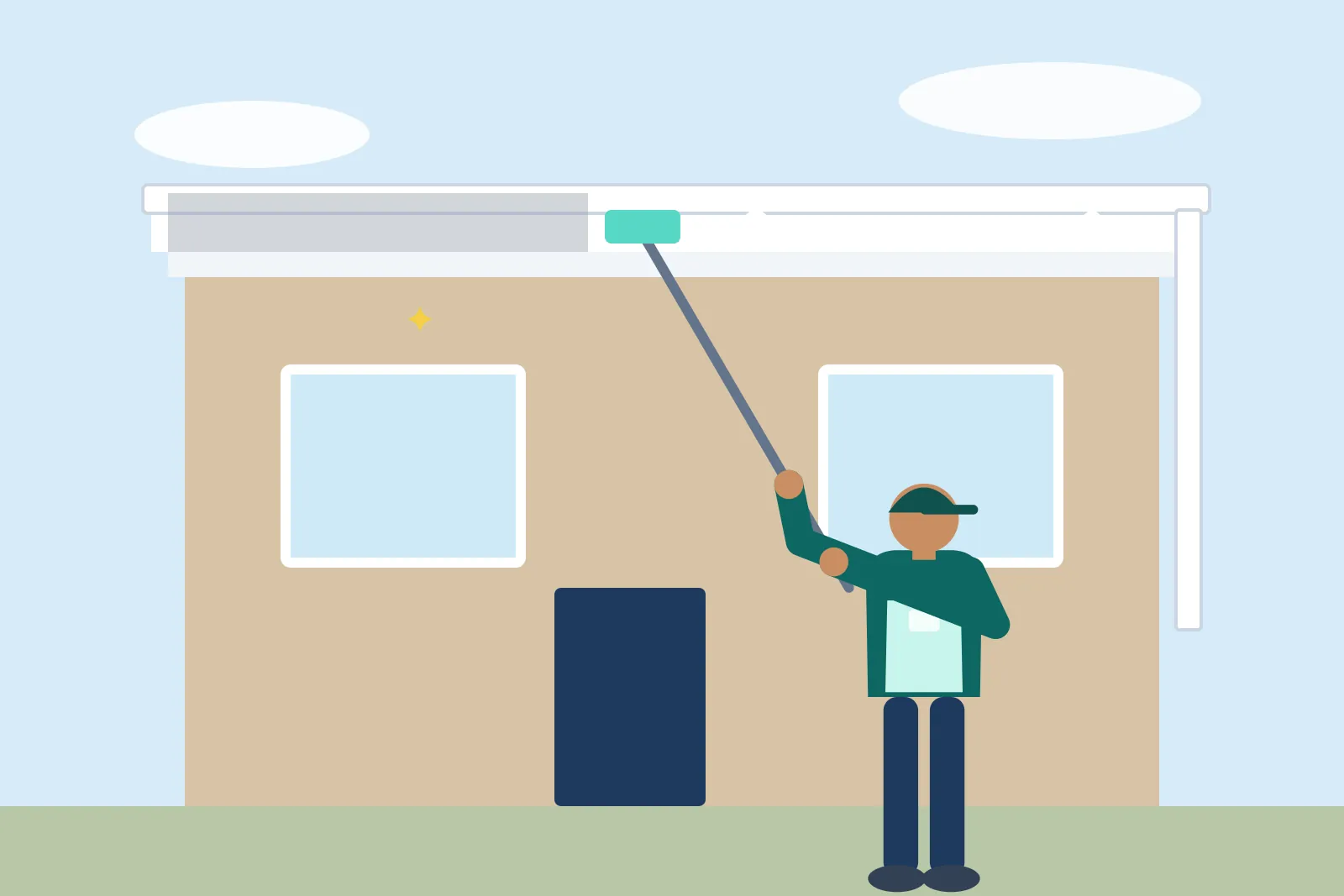
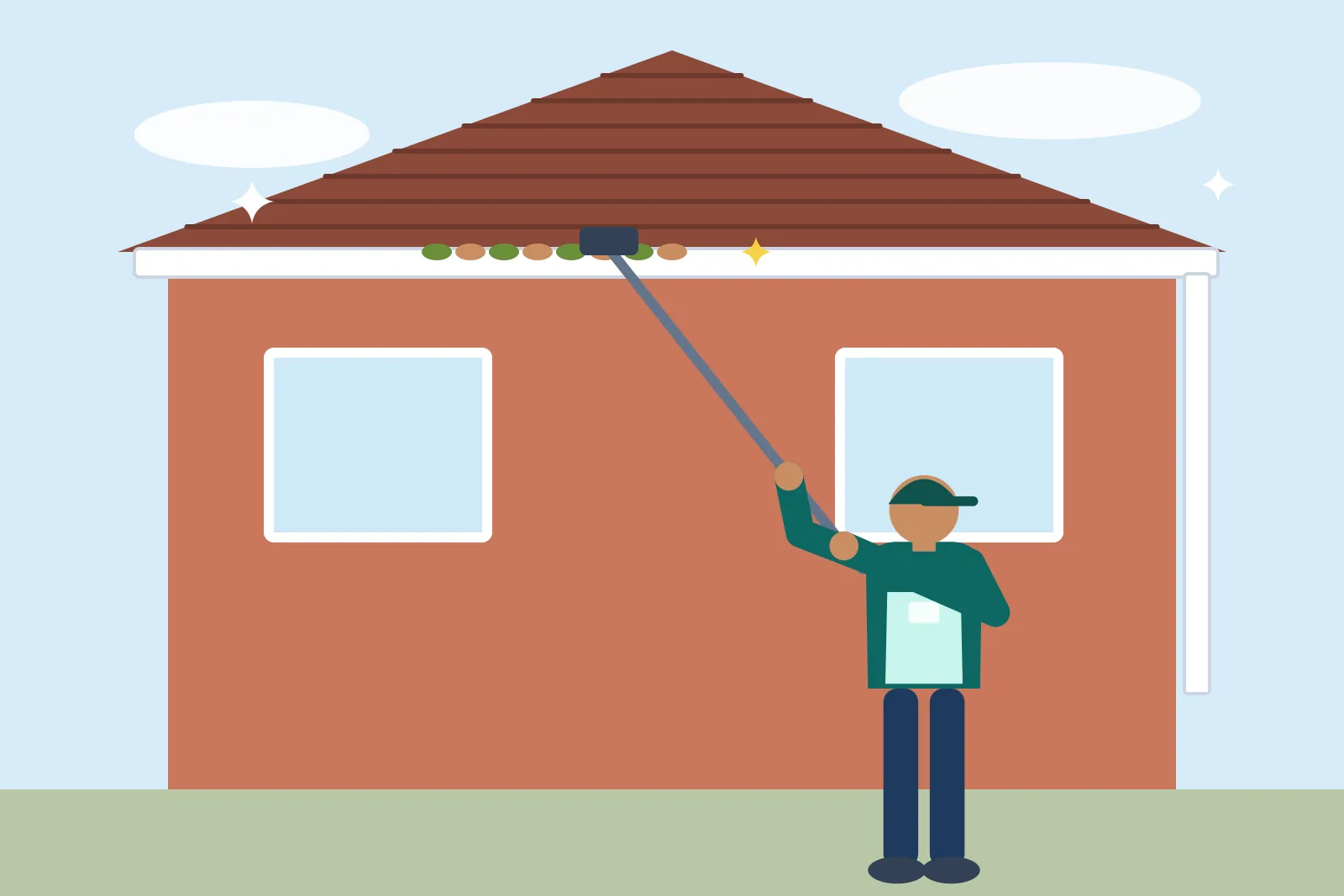
Working at height is the biggest risk with gutter cleaning; falls from ladders are a leading cause of serious injury in home maintenance. Where possible, work from the ground. Gutter cleaning kits with extendable poles and scoop or hook heads let you clear single-storey and some two-storey gutters without a ladder. Wet-and-dry vacuums with gutter pole attachments are another option, and are what many professionals use.
If you use a ladder
For a single-storey extension or bungalow, a ladder may be reasonable if you're confident and fit. Use a sound ladder on firm, level ground, with a stand-off or stabiliser so it doesn't rest on the gutter itself, and have someone foot it. Keep your body between the stiles, don't overreach – move the ladder – and never work on a ladder in wind or rain.
Scoop debris into a bucket hooked to the ladder or onto a tarpaulin below, working away from the downpipe. Then flush the gutter with a hose to check it flows to the outlet. Two-storey and three-storey gutters are generally a job for a professional with the right access equipment.
Get quotes from local cleaners
Clearing downpipes
If water backs up even with a clear gutter, the downpipe is blocked. Remove any leaf guard or cage at the top, run a hose down from above, or use a drain rod from the bottom if it's accessible. Many downpipes have an access hatch or a shoe at the bottom that can be removed. A blocked gully at the base is often part of the problem – clear it out by hand with gloves.
What a professional gutter cleaning service includes
Professional gutter cleaners usually use high-powered gutter vacuums on carbon-fibre poles, working from the ground up to three or four storeys. Many use a pole-mounted camera so you can see the gutters before and after – ask for photos or video. A typical service clears all the gutters, checks the downpipes run freely and reports any damaged brackets, joints or sections.
Prices are usually based on the size and height of the property, with semi-detached and terraced homes cheaper than large detached houses and extra charges for conservatories, extensions or flat roofs. Many window cleaners offer gutter clearing as an add-on, often with fascia and soffit cleaning – see our fascia and soffit cleaning guide.
Gutter guards
Mesh, brush or foam gutter guards keep large leaves out and can reduce how often gutters need clearing. They don't eliminate maintenance: fine debris, moss and seeds still collect on top or inside them, and they need cleaning themselves. They work best on homes with a lot of leaf fall from nearby deciduous trees.
Landlords and flats
For rented homes, gutters and downpipes are normally the landlord's responsibility as part of keeping the structure and exterior in repair. In blocks of flats, gutter clearing is usually organised by the freeholder or managing agent and paid through the service charge. Our guide to communal area cleaning covers other shared maintenance in blocks.