What causes mould on walls
Mould needs moisture. In UK homes, the most common source is condensation: warm, moist air from cooking, showering, drying clothes indoors and breathing meets a cold surface and turns back into water. External walls, corners, the area behind furniture, window reveals and ceilings below cold lofts are typical spots, and it's worst in winter.
Other causes include rising damp (a tide mark low on the wall, often with salts), penetrating damp from leaking gutters, roofs or pointing (patches that get worse after rain), and leaks from pipes or a bathroom above. These need the source repaired. Cleaning alone will only buy a few weeks.
Health and safety
Mould can trigger asthma and allergies and irritate the eyes, skin and airways. Government guidance for landlords and housing providers, updated after the death of a toddler in Rochdale in 2020, stresses that damp and mould are health hazards that should be dealt with promptly, not blamed on tenants' 'lifestyle'.
For small areas – roughly up to a square metre – you can usually clean it yourself. Wear rubber gloves, safety glasses and a well-fitting mask, open the windows and keep the door to the rest of the house closed. Anyone with asthma, a weakened immune system, babies and older people should stay out of the room. Larger or recurring areas need professional assessment.
Step by step: removing mould
Don't dry brush or vacuum mould first – it releases spores. Lightly mist the area with water or the cleaning product to keep spores down.
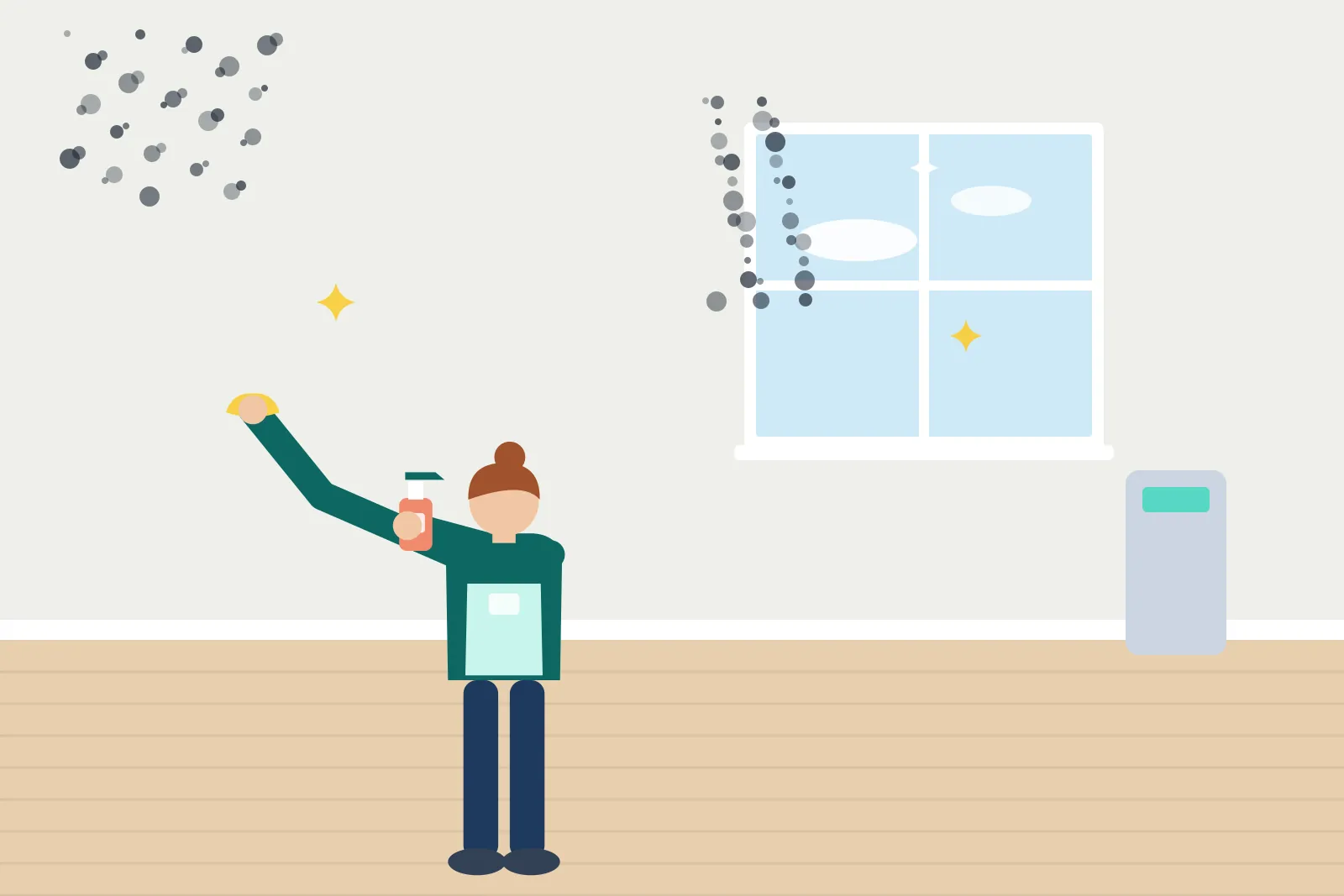
Use a mould and mildew remover suitable for walls and ceilings, following the label – most contain bleach or another fungicide and need a few minutes' contact time. Alternatively, many people use a mix of washing-up liquid and water to physically wipe mould off, followed by a fungicidal wash. Apply with a cloth or sponge, wipe gently, and rinse the cloth frequently in a separate bucket. Seal used cloths in a plastic bag and throw them away.
Let the area dry thoroughly with the window open. Check it again after a few days and repeat if spots reappear.
Wallpaper, plaster and soft furnishings
Mould on wallpaper often goes through to the plaster behind it. Wipe the surface gently, but if it returns or the paper is bubbling or stained, the paper may need stripping so the wall can be treated and dried. Bare plaster absorbs liquid, so use as little as possible and let it dry well.
Check the backs of wardrobes, curtains, mattresses and clothes stored against the affected wall. Mouldy fabrics can sometimes be washed at a high temperature; heavily affected items such as old mattresses may need replacing. Moving furniture a few centimetres away from external walls lets air circulate and reduces the problem.
Get quotes from local cleaners
Stopping it coming back
Reducing moisture is the long-term fix:
- Use extractor fans when cooking and showering, and keep them running for 15–20 minutes afterwards
- Put lids on pans and close the kitchen door while cooking
- Dry clothes outside or in a vented tumble dryer where possible; if not, dry them in one room with a window open or a dehumidifier
- Open trickle vents on windows and air rooms for a few minutes each morning
- Heat the home steadily at a low level rather than in short bursts
- Wipe condensation from windows and sills each morning
- Leave a gap between furniture and external walls
Renting: who is responsible?
Tenants are generally expected to ventilate and heat their homes reasonably and report problems. Landlords are responsible for repairs and for dealing with damp and mould caused by disrepair, poor insulation or inadequate ventilation, and housing standards treat serious damp and mould as a hazard. If mould keeps returning despite cleaning, report it in writing.
At the end of a tenancy, surface mould is often noted at check-out. Cleaning it before you leave, with photos, helps – see our end of tenancy cleaning checklist and deposit deductions guide.
Professional mould cleaning
Professional deep cleaners can remove surface mould from walls, ceilings, window reveals and sealant as part of a wider clean, using appropriate products and protective equipment. Extensive, recurring mould or mould linked to leaks or structural damp needs a damp and mould specialist or surveyor to find and fix the cause. Bathroom mould is covered separately in our bathroom mould guide.