What fascias and soffits are
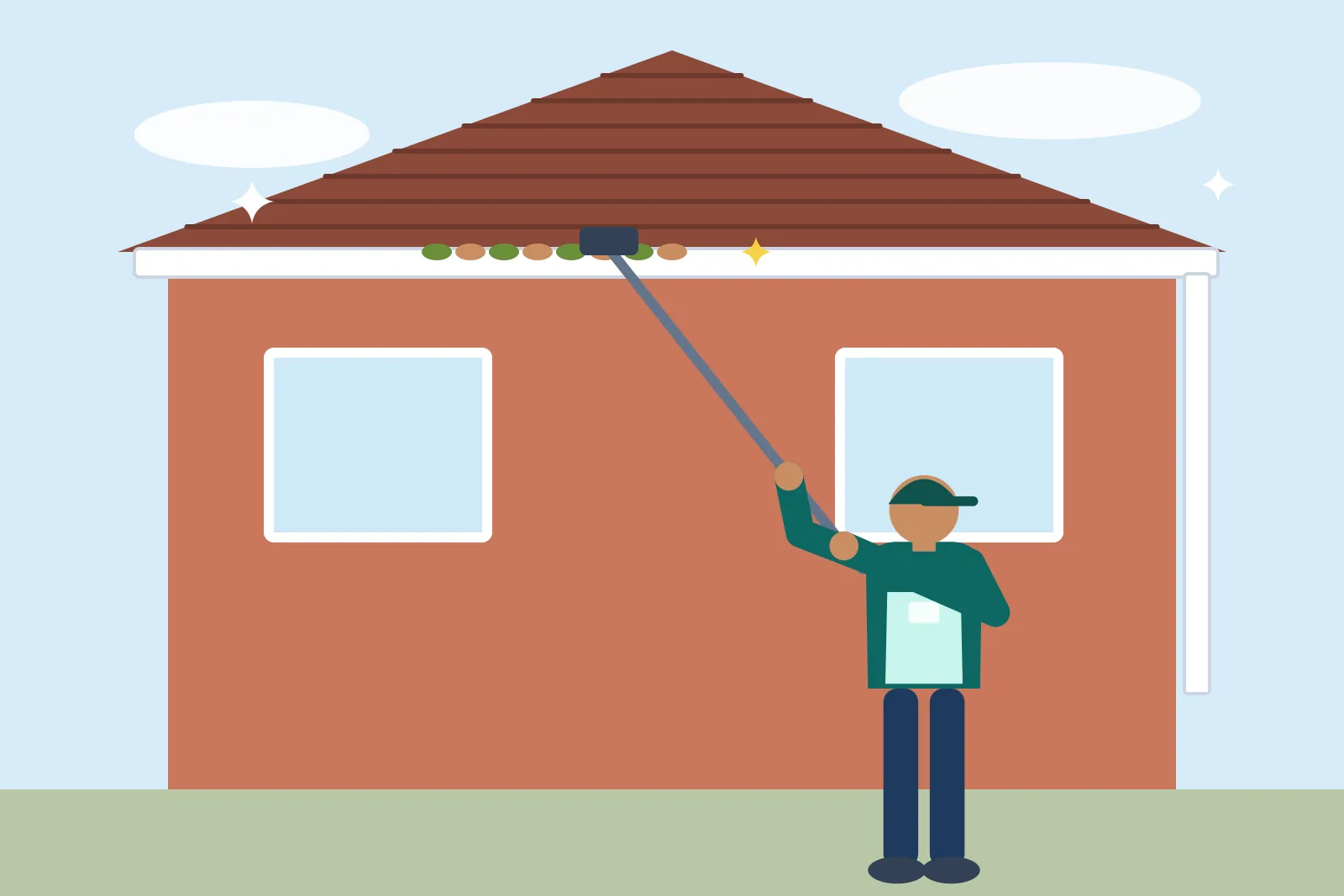
The fascia is the board running along the edge of the roof, where the gutters are usually fixed. The soffit is the horizontal board underneath it, closing off the gap between the fascia and the wall. On gable ends, the sloping boards are bargeboards. In most homes built or updated since the 1990s, these are white or coloured uPVC; older homes may still have timber.
Together with the gutters, they're called the roofline. Because they're high up and face the weather, they collect traffic film, algae, spider webs and the black streaks that run down from gutters.
Why they go green and black
Green staining is algae, especially on north-facing and shaded sides of the house. Black streaks are usually dirt and pollution washed down by rain, often worst below gutter joints that drip. Grey film is airborne grime and traffic pollution, heavier on busy roads. On older uPVC, chalky yellowing can be the plastic itself weathering, which cleaning improves but can't fully reverse.
How professionals clean them
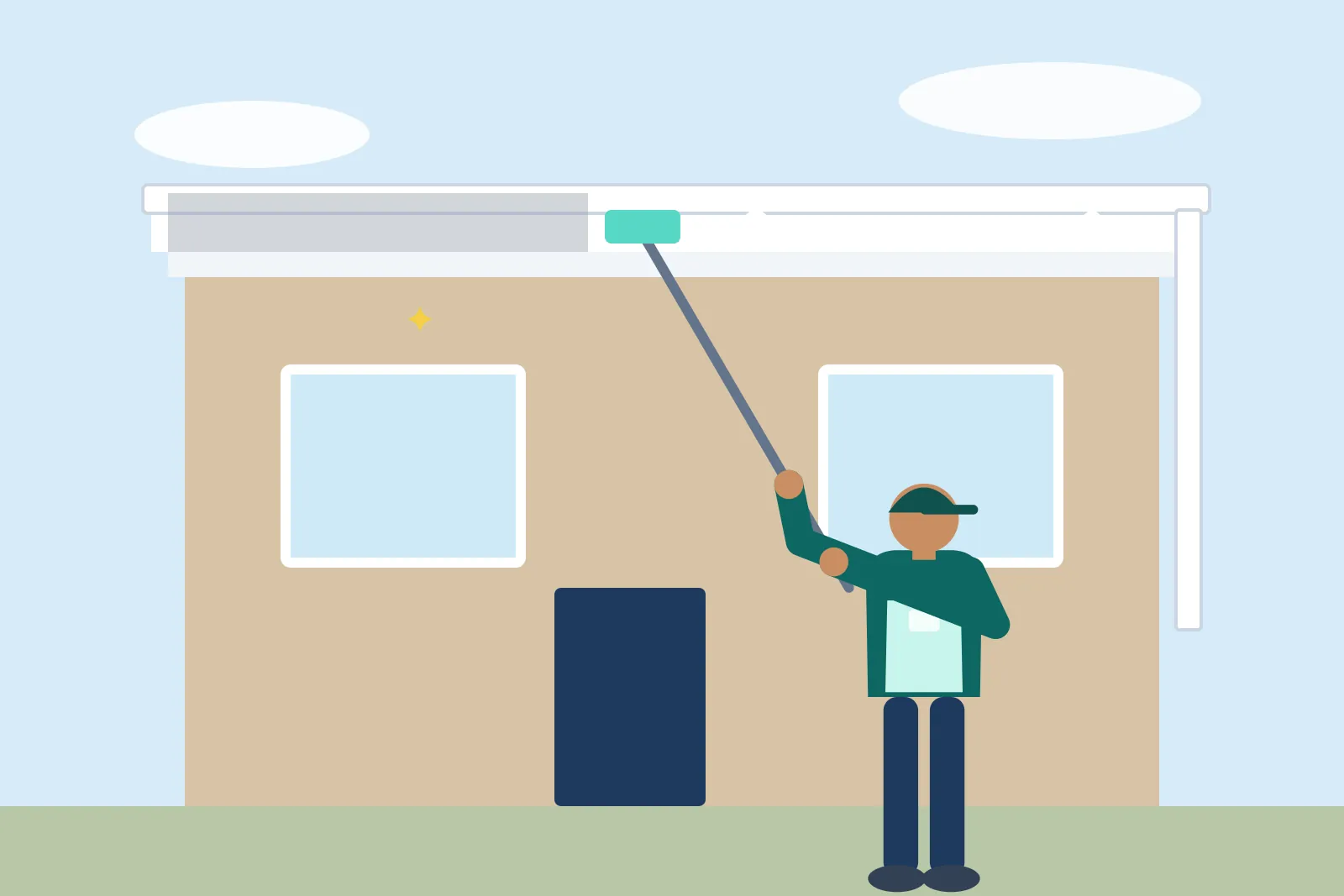
Most roofline cleaning is done from the ground with water-fed poles – the same telescopic carbon-fibre poles used for window cleaning, fitted with soft brushes. Purified water, sometimes with a uPVC-safe detergent, is used to scrub the fascias, soffits and the outside of the gutters, then rinse them. Because the water is purified, it dries without spots.
For heavy algae, a biocide treatment may be applied first. Some firms use steam or low-pressure soft washing on stubborn staining. Gutter clearing – removing the debris inside the gutters – is normally priced separately but often done on the same visit; see our gutter cleaning guide.
Can you clean fascias yourself?
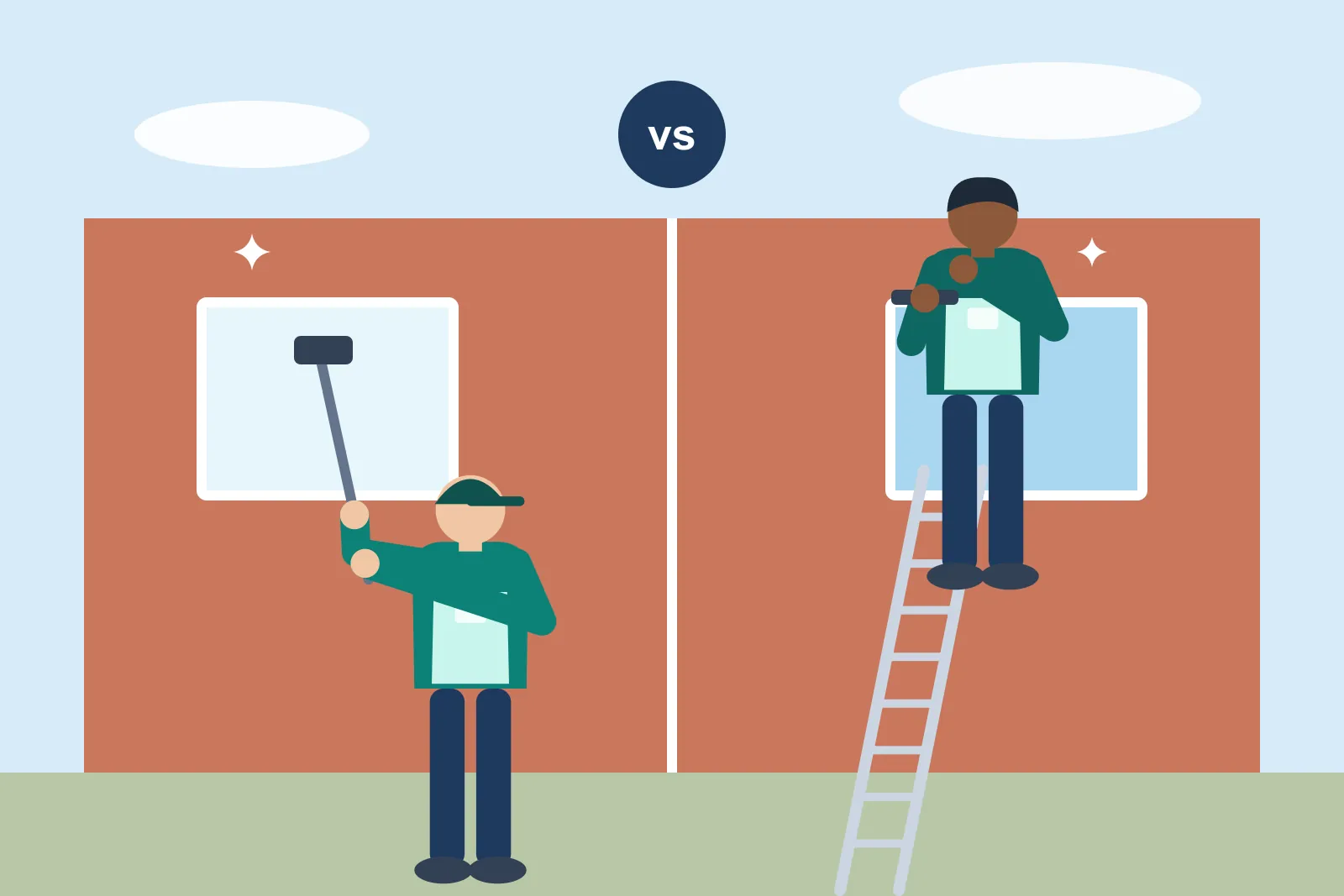
On a bungalow or single-storey extension, you can usually clean fascias from the ground with an extendable brush or a long-handled soft brush, a bucket of warm water with washing-up liquid or a uPVC cleaner, and a hose to rinse. On two-storey homes, working from a ladder at roof level is risky, and reaching fascias properly often means leaning out – which is exactly when ladders slip.
If you do use a ladder, use a stand-off so it doesn't rest on the gutter, have someone foot it and never overreach.
Get quotes from local cleaners
What's usually included in a roofline clean
A typical professional roofline cleaning service covers:
- Fascias and bargeboards
- Soffits
- The outside face of the gutters, including black streaks
- Downpipes, wiped down from top to bottom
- Optional: clearing inside the gutters and checking downpipes flow
- Optional: window frames, sills and doors at the same time
How often and how much
Most homes only need roofline cleaning every one to three years, depending on shade, trees and traffic. It's commonly priced by property size and height, with packages that combine gutter clearing, fascia and soffit cleaning and window frames. Ask for a written quote that lists which elements are included, and whether conservatories, porches and extensions cost extra.
Many people book it before selling a house, because a clean white roofline makes a noticeable difference to kerb appeal in listing photos – see our guide to cleaning before selling your house.
Conservatories and uPVC windows
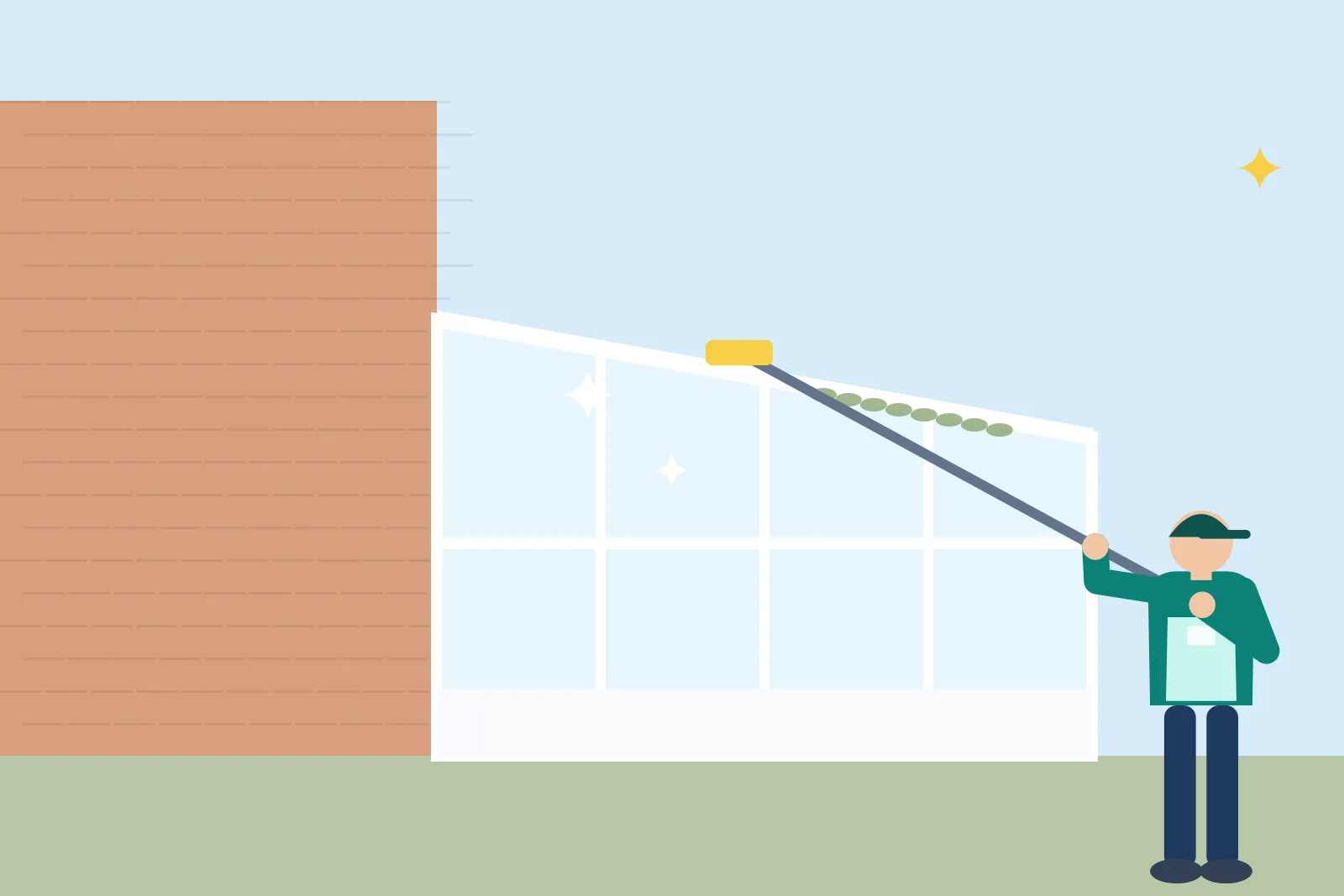
uPVC window frames and conservatory frames get the same green and grey staining as the roofline. Our guide to cleaning uPVC windows, doors and conservatory roofs covers what you can do yourself and when to book a specialist.