Pet hair
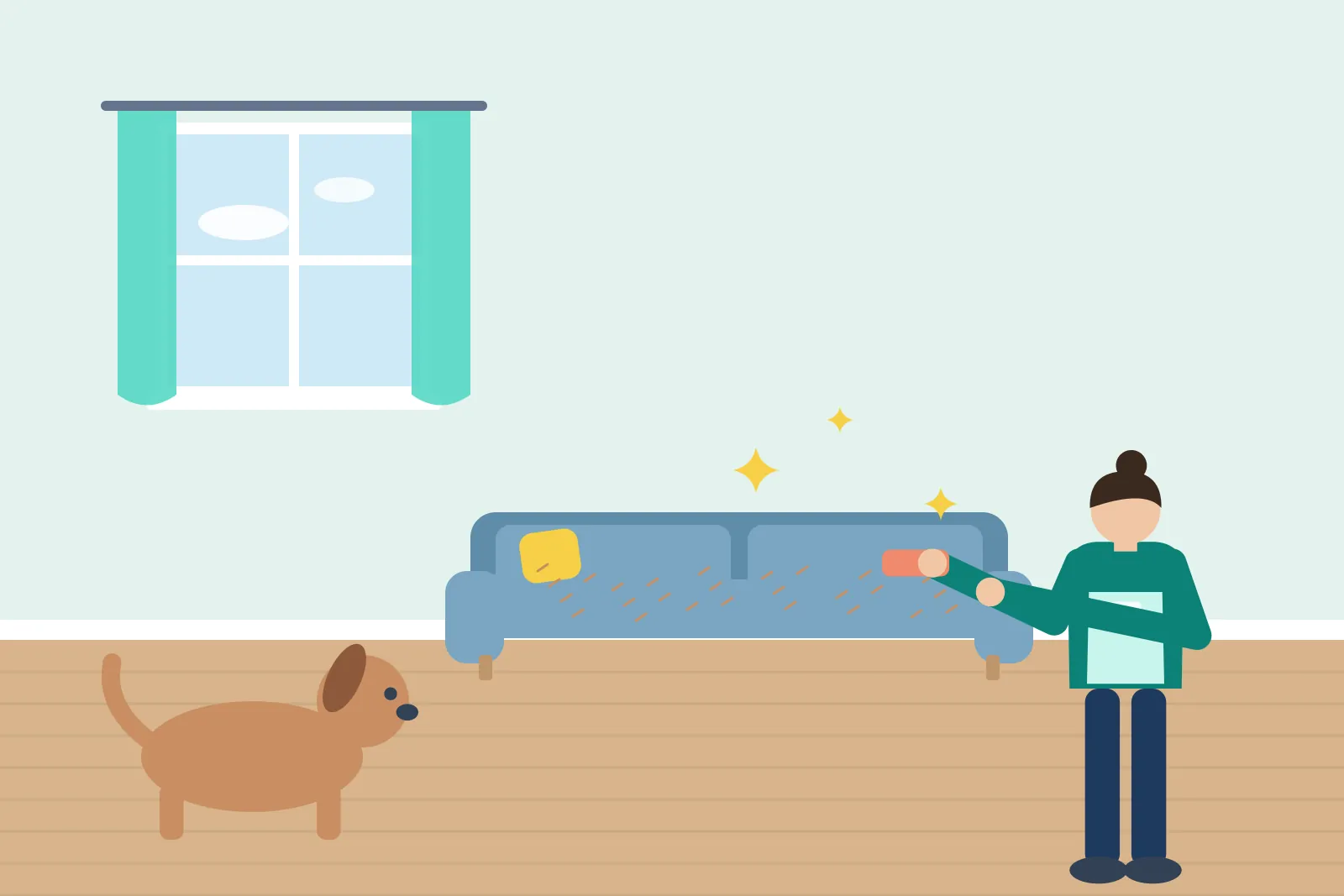
Regular brushing (outside, if you can) reduces the amount of hair on your furniture. Inside, vacuum more often – daily in busy areas during moulting season. A vacuum with a pet tool or a mini turbo brush helps on stairs and upholstery.
On sofas and cushions, a damp rubber glove or rubber brush pulls hair into clumps you can pick up. Washable throws on your pet's favourite spots are much easier to clean than the sofa itself.
Muddy paws
A towel and a bowl of water by the back door after walks saves a lot of mopping. Absorbent mats at entrances catch the worst of it. Hard floors in hallways and kitchens are easier to keep clean than carpet.
Dealing with accidents
Speed matters. Blot up as much liquid as possible with kitchen roll, pressing firmly, then clean with an enzyme-based cleaner designed for pet accidents. Enzyme cleaners break down the proteins that cause smells. Ordinary household cleaners may leave a scent your pet can still detect, which can encourage them to go back to the same spot.
Avoid ammonia-based products on accidents – ammonia is also found in urine and may attract pets back. If an accident has soaked into a carpet's underlay, it may need professional cleaning to remove the smell fully.
Smells
Wash pet bedding regularly according to its label, and wash blankets and throws they lie on. Ventilate the home daily. Bicarbonate of soda sprinkled on carpets, left for a few hours and vacuumed up can freshen them. If a smell persists, find the source rather than masking it.
Pet-safe cleaning
Many products are fine once dry, but pets can walk on wet floors and lick their paws. Keep pets out of rooms while you're cleaning and until floors are dry. Store products securely, and follow label instructions.
- Some essential oils and products containing them can be harmful to pets, particularly cats
- Keep pets away from bleach and other strong products
- Rinse floors after mopping if your pets lie on them
- Ask your vet if you're unsure about a particular product
Get quotes from local cleaners
Telling your cleaner
Let your cleaner know about any pets when you ask for quotes – pet hair adds time and some cleaners have allergies or aren't comfortable with certain animals. Agree where pets will be during the clean, whether doors to the garden should stay shut, and any products to avoid.
Cats, litter trays and small pets
Litter trays are best scooped daily and fully emptied and washed regularly, using hot water and a mild detergent. Avoid strong-smelling products, which can put cats off using the tray. Keep trays away from where food is prepared.
Cages and hutches for rabbits, guinea pigs and other small pets need regular cleaning to keep smells down. Check that cleaning products are safe for the animal, rinse well and let everything dry before returning bedding. Pregnant women are often advised to avoid cleaning litter trays or to wear gloves – speak to your GP or midwife.
Moulting season
Many dogs and cats shed more in spring and autumn. Brushing more often during these times, ideally outside, keeps hair off furniture and floors. A grooming session before a clean, not after, saves doing the floors twice.
Professional help
Carpet and upholstery cleaning every year or so is worth considering in pet homes, as it removes hair, dander and odours that vacuuming can't reach. See our carpet cleaning guide and carpet cleaning prices.