What each word means
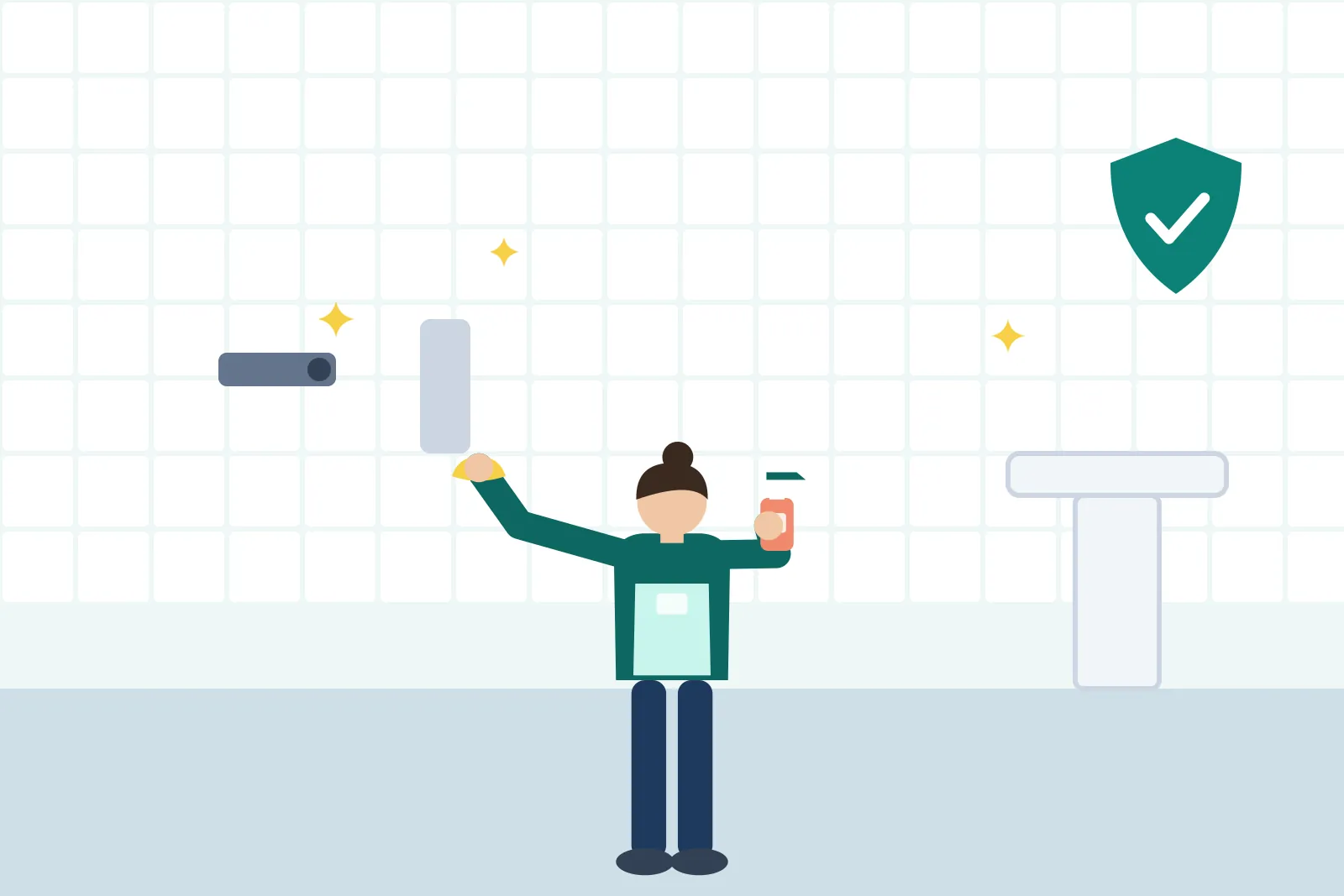
Cleaning means physically removing dirt, grease, food and germs from a surface, usually with detergent and water and a cloth or mop. It doesn't necessarily kill germs, but it removes a large proportion of them.
Sanitising usually means reducing germs to a level considered safe, often used for food contact surfaces. Disinfecting means using a chemical (or heat) to kill most microorganisms on a surface – bacteria, viruses and fungi – to a tested standard. Sterilising, which kills all microorganisms including spores, is for medical and laboratory settings, not homes.
Why cleaning comes first
Disinfectants work much less effectively on dirty surfaces. Grease, food residue and dirt shield germs and react with some disinfectants, using them up. That's why guidance for kitchens, healthcare and childcare almost always says clean first, then disinfect.
Some products are combined 'cleaner disinfectants' designed to do both, but on visibly dirty surfaces it's still best to clean first and then apply the product again for the contact time.
Contact time matters
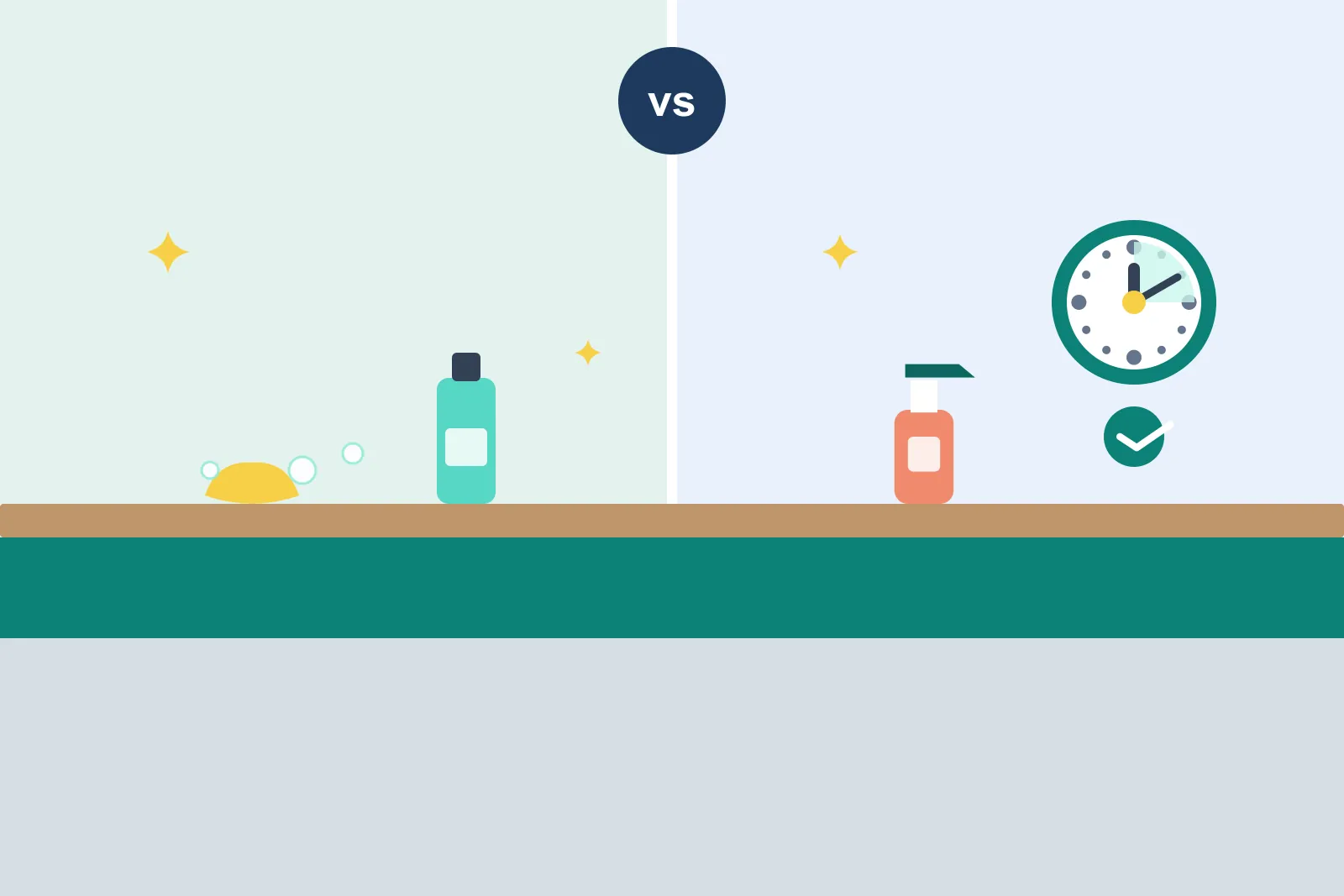
Every disinfectant needs a certain amount of time on a wet surface to work – its contact or dwell time. It might be 30 seconds, five minutes or longer, and it's printed on the label. Spraying and immediately wiping off often doesn't disinfect at all.
Professional products are tested against European standards such as BS EN 1276 (bacteria) and BS EN 14476 (viruses). If you need a product that kills a particular germ, look for the relevant standard and follow the contact time it was tested at.
Get quotes from local cleaners
When you actually need to disinfect at home
In most homes, regular cleaning is enough most of the time. Disinfecting is worthwhile:
- After preparing raw meat, poultry or fish – on worktops, chopping boards and taps
- When someone has a stomach bug, flu or another infection – toilets, taps, door handles and touch points
- After cleaning up vomit, faeces or blood
- When someone in the house is vulnerable to infection
- For pet bowls, litter trays and areas where pets have had accidents
Common mistakes
Using disinfectant everywhere, all the time, isn't necessary and adds cost and chemical exposure without much benefit. Not cleaning first, wiping off too soon, diluting too much or using the wrong product for the germ are the most common reasons disinfecting doesn't work.
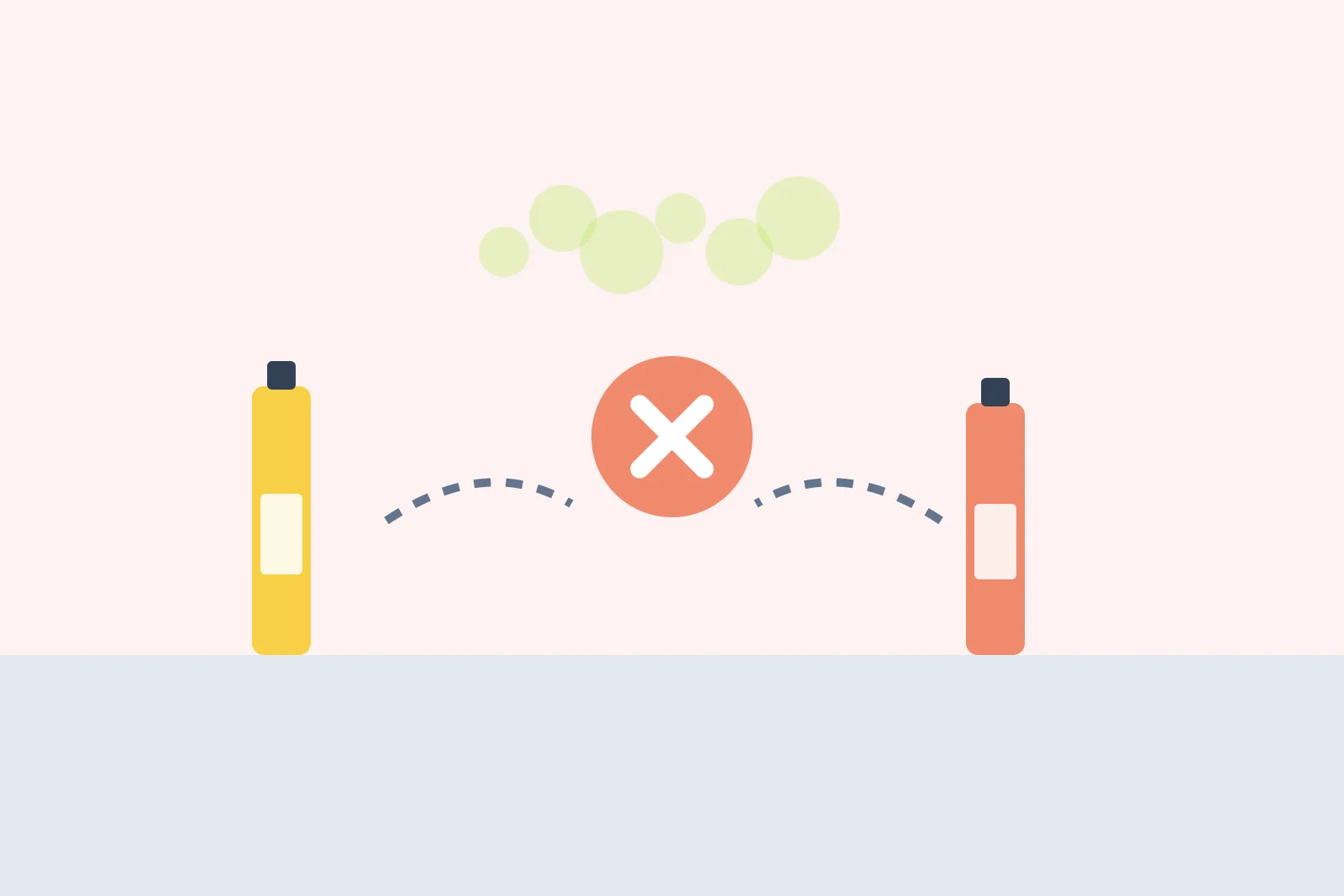
Mixing products is dangerous. Bleach mixed with acidic cleaners (including many limescale removers and vinegar) or ammonia releases toxic gases. Our guide to products you should never mix lists the combinations to avoid.
In workplaces
Offices, gyms, schools, nurseries, clinics and food businesses have different hygiene needs. Many use a routine of daily cleaning with periodic disinfection of high-touch points, and enhanced disinfection when there's an outbreak. Cleaning specifications should say which surfaces are disinfected, with what and how often. Products used at work must be handled in line with COSHH – see COSHH and cleaning products.
Specialist disinfection services, including fogging, are used after outbreaks or in high-risk settings – see disinfection and sanitisation services. For regular workplace cleaning, see commercial cleaning.