What is COSHH?
COSHH stands for the Control of Substances Hazardous to Health Regulations 2002. They require employers to control exposure to hazardous substances at work – including many cleaning products such as bleaches, descalers, degreasers and some disinfectants. Northern Ireland has equivalent regulations.
The Health and Safety Executive (HSE) publishes guidance for employers, including specific guidance for cleaning.
What employers need to do
In broad terms, COSHH means:
- Identify which products are hazardous – the label and safety data sheet tell you
- Assess the risks: who uses them, how, how often and in what quantities
- Decide on controls: safer alternatives, ventilation, dilution systems, PPE
- Train people who use them
- Store products safely and securely
- Review the assessment when things change
Safety data sheets
Suppliers of hazardous products must provide a safety data sheet (SDS). It explains the hazards, safe handling, first aid, storage and what to do in a spill. Keep SDSs for every product used on site somewhere easy to find, and make sure the people using the products know what's in them.
Safe use and storage
The basics prevent most problems:
- Keep products in their original, labelled containers
- Never decant into food or drink containers
- Use measured dilution – more concentrated isn't more effective
- Never mix products; some combinations release toxic gases
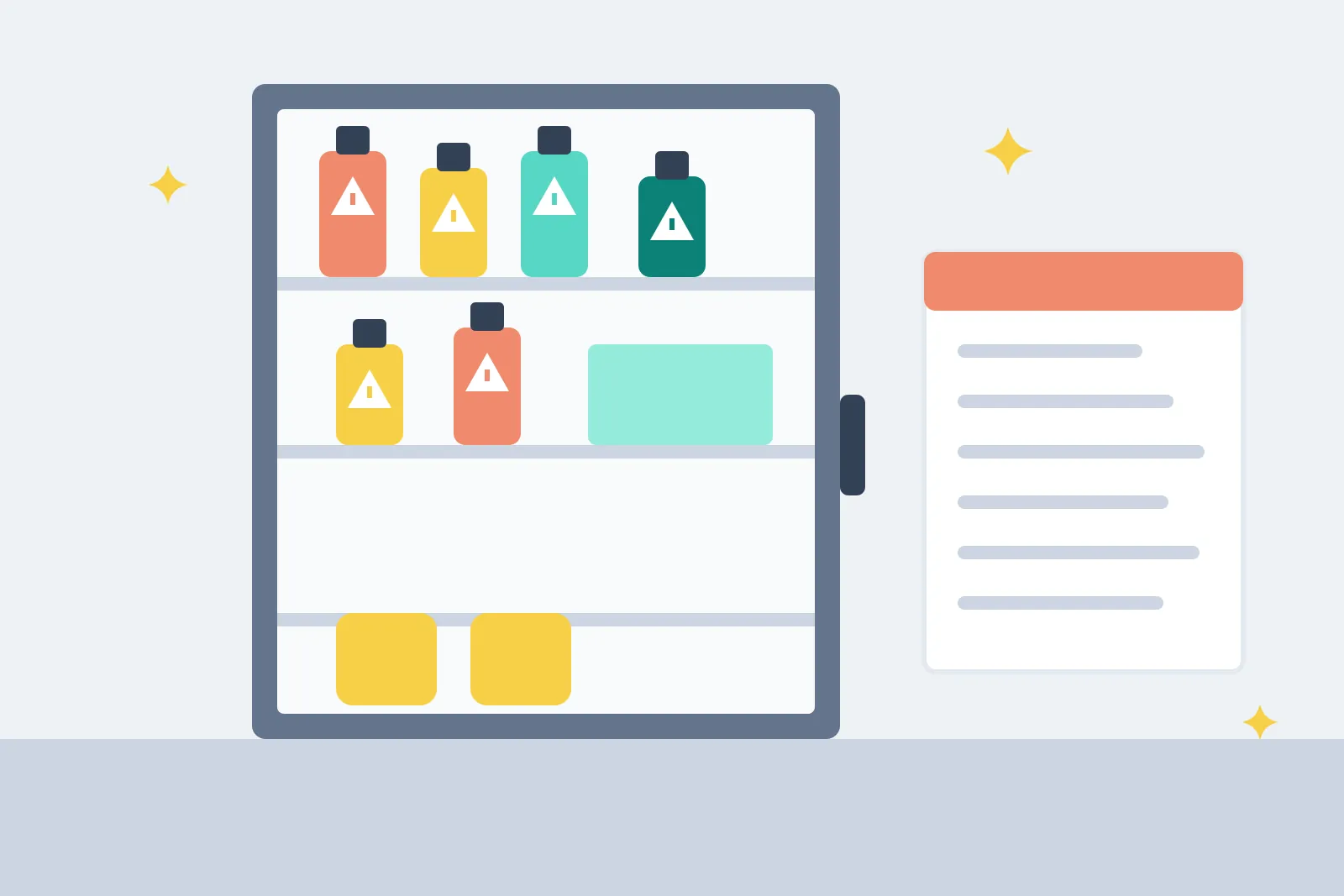
- Store in a ventilated, lockable cupboard away from food and heat
- Provide and use the PPE specified in the risk assessment
Get quotes from local cleaners
If you use a contract cleaner
A cleaning contractor is responsible for COSHH assessments for the products they bring and use. But you share responsibilities for the site, so ask for their COSHH assessments and SDSs, agree where products will be stored, and make sure their products won't affect your staff, visitors or processes. A professional contractor will provide these without hesitation.
What a COSHH assessment covers
A typical assessment for a cleaning product records:
- The product and its hazards
- Who uses it, where and how often
- How people might be exposed (skin, eyes, breathing)
- The controls in place, including dilution and ventilation
- The PPE needed
- First aid and spill procedures
- Storage and disposal
Spills and accidents
Have a simple plan for spills: who deals with them, where the spill kit is kept and what to do if a product gets on skin or in eyes. The safety data sheet gives first aid advice. Keep the product's container or label available so you can tell medical staff exactly what was involved.
Report and record incidents in line with your health and safety procedures, and review whether anything needs to change.
Allergies and sensitivities
Some staff may be sensitive to strong fragrances or sprays. Where possible, choose lower-hazard products, spray onto cloths rather than into the air, and schedule heavier cleaning outside working hours. See our guide to cleaning for allergies and asthma.