What the law says
In Great Britain, the Workplace (Health, Safety and Welfare) Regulations 1992 require employers to provide suitable and sufficient toilets and washing facilities, kept clean and in an orderly condition, with hot and cold (or warm) running water, soap and a means of drying hands. Northern Ireland has equivalent regulations. The HSE's guidance and Approved Code of Practice cover numbers of facilities for different numbers of staff.
In practice, that means a regular cleaning schedule, consumables that don't run out and a way of dealing with problems quickly.
Cleaning frequency
Washrooms in regular use should normally be cleaned at least daily. Busy washrooms – in large offices, shops, restaurants or public-facing buildings – need checks and top-ups during the day as well. A simple check sheet on the door showing when the washroom was last checked reassures users and helps managers spot gaps.
What a washroom clean includes
A thorough daily clean typically covers:
- Toilets and urinals cleaned inside and out, including seats, hinges and bases
- Sinks, taps and surrounds cleaned and descaled
- Mirrors and glass
- Touchpoints: door handles, locks, flush handles, hand dryers, dispensers
- Partitions and walls spot-cleaned
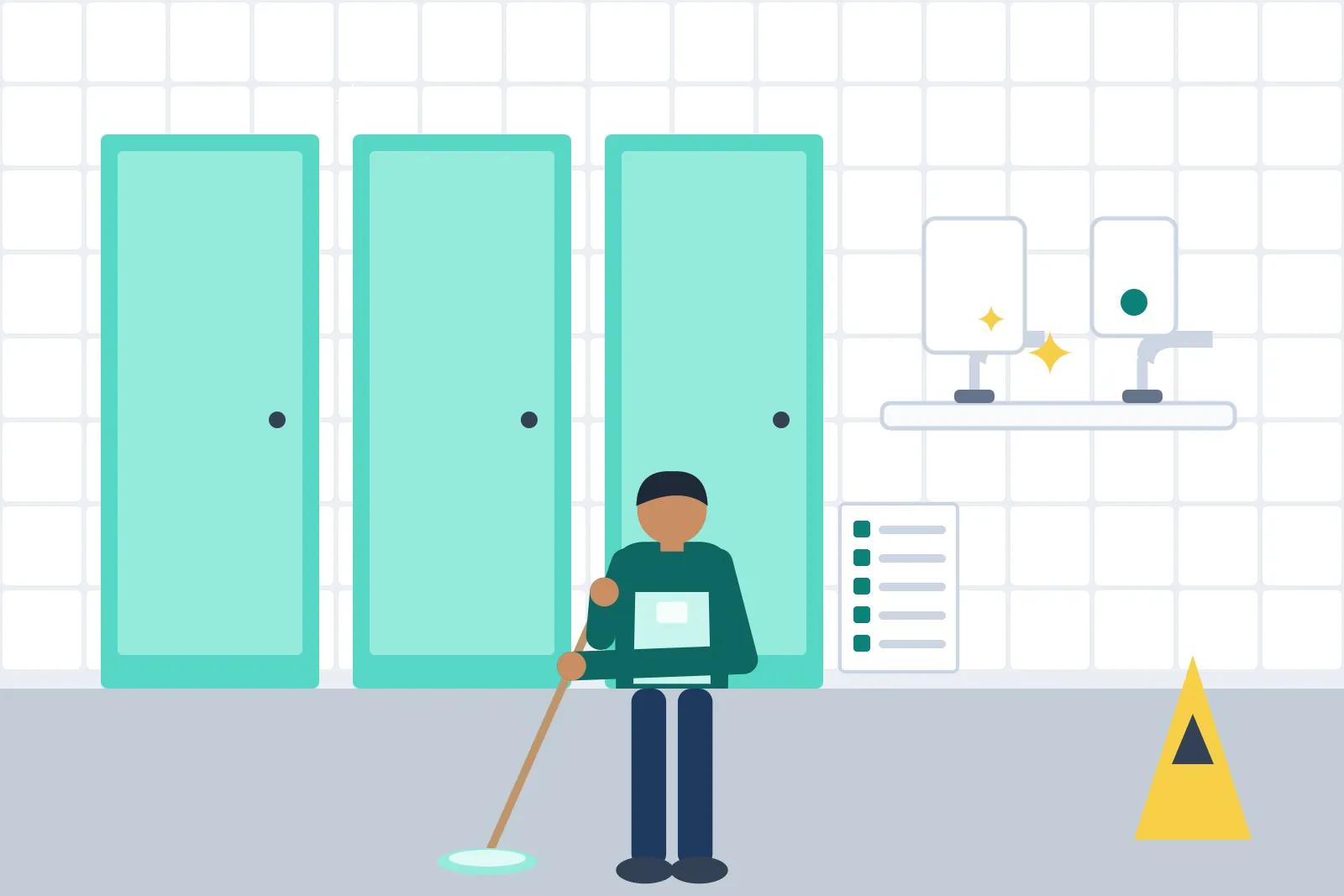
- Floors mopped, paying attention to corners and around toilets
- Bins emptied
- Soap, toilet paper and hand towels restocked
Preventing cross-contamination
Professional cleaners use colour-coded cloths and mops – commonly red for toilets and urinals – so equipment used in washrooms isn't used on kitchen or office surfaces. If staff clean any areas themselves, the same principle applies.
Sanitary waste and specialist services
Employers must provide suitable means for disposing of sanitary products in women's toilets, and good practice is to provide them in all facilities used by people who may need them. Sanitary bins are usually supplied and emptied by specialist hygiene companies under a contract. Feminine hygiene, nappy disposal and medical waste are regulated waste streams, so use a licensed provider.
Get quotes from local cleaners
Consumables
Running out of soap or toilet paper is one of the most common washroom complaints. Agree who monitors and restocks consumables and how often. Many contract cleaners include restocking, with consumables either supplied by you or charged separately.
Hand hygiene
Clean washrooms only help if people can wash their hands properly. Make sure there's always soap, a working hand dryer or paper towels, and warm water. Hand-washing signs near the sink are a helpful reminder, particularly in food businesses and healthcare settings.
Touchpoints such as door handles, taps and flush handles carry the most germs, so they should be cleaned on every visit.
Accessible toilets and baby changing
Accessible toilets and baby changing facilities need the same care as other washrooms, and sometimes more. Check alarm cords are hanging free and not tied up, that grab rails are clean and secure, and that baby changing units are wiped and in working order.
Periodic deep cleans
Every few months, a deeper clean removes limescale and urine scale from urinals and toilets, cleans grout and high areas, and descales taps thoroughly. It keeps washrooms fresher between routine cleans. Ask your contract cleaner whether this is included or priced separately. See commercial cleaning for what's usually offered.