Daily cleaning
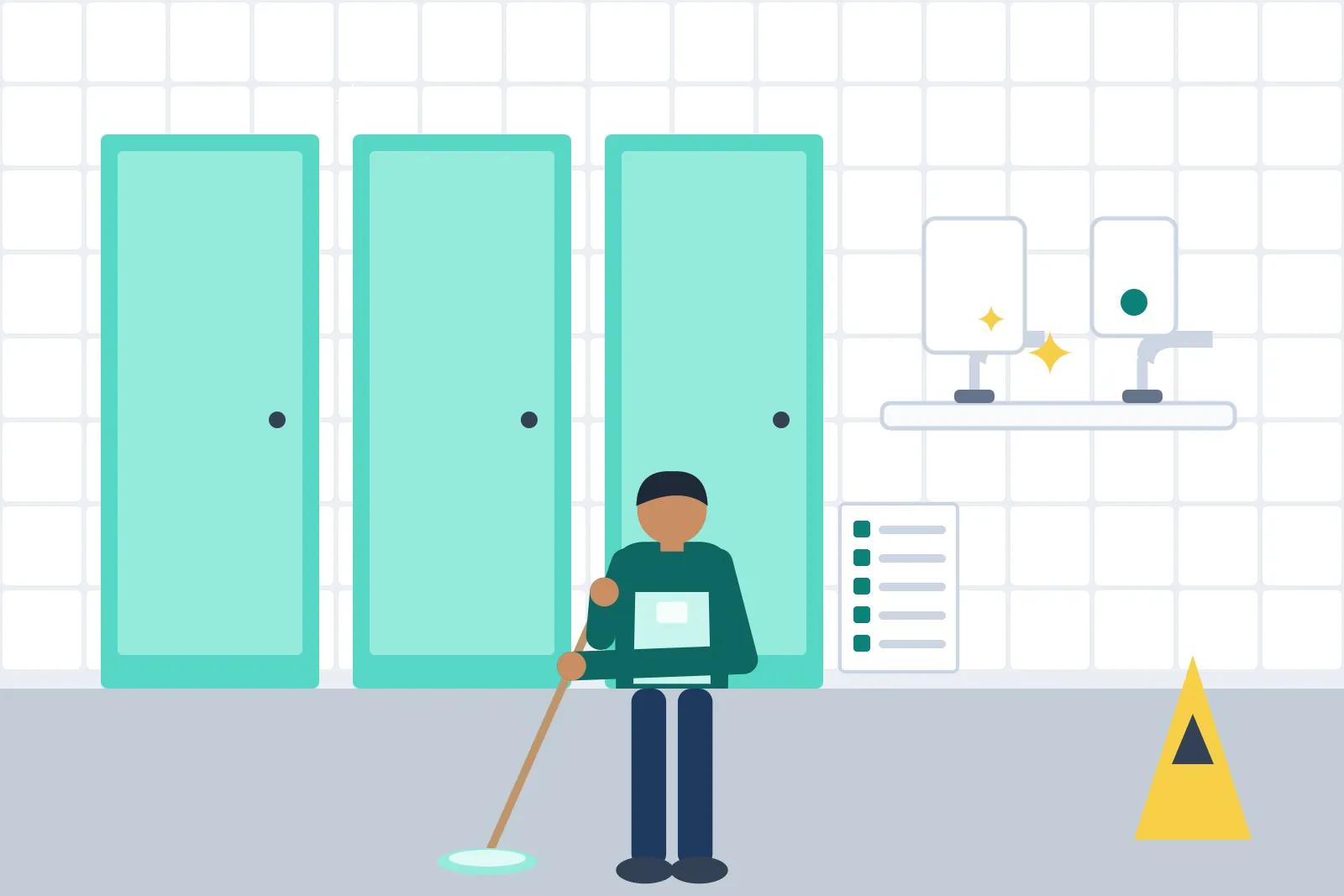
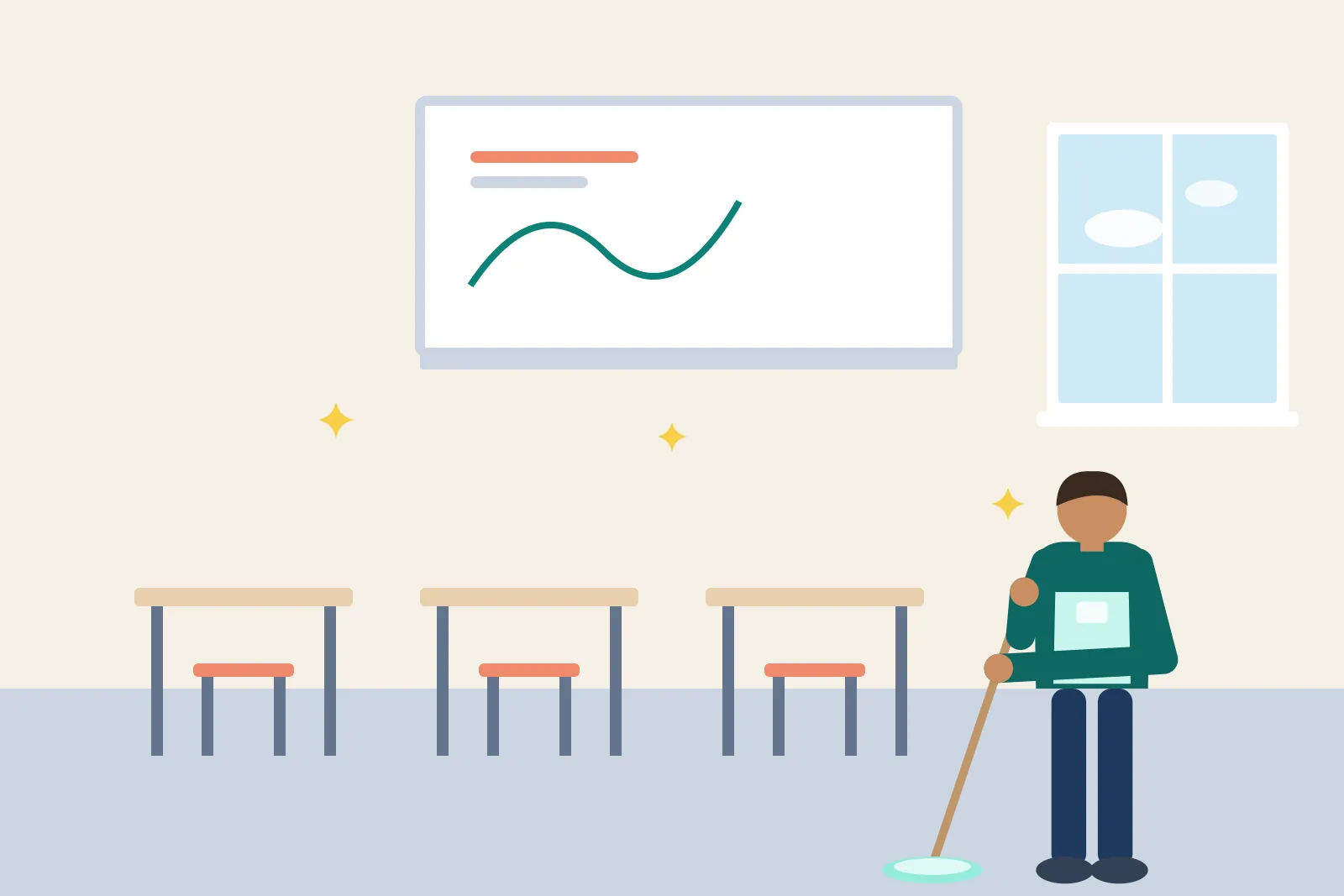
Most schools have classrooms, corridors and toilets cleaned every day after pupils leave, usually by a team working in the late afternoon and evening. Typical daily tasks include emptying bins, vacuuming and mopping floors, wiping desks and tables, cleaning whiteboards, cleaning and restocking toilets, and wiping door handles and other high-touch points.
Toilets often need checking during the school day too, especially in secondary schools where they're heavily used at break and lunchtime.
Dining halls and kitchens
School kitchens are food businesses and inspected by environmental health, so they follow a food safety cleaning schedule – usually managed by the catering provider. Dining halls need tables and floors cleaned after every sitting and a thorough clean each day. Spills should be dealt with straight away because of slip risks.
Sports halls, changing rooms and specialist rooms
Different areas need different approaches:
- Sports hall floors cleaned with methods and products suitable for sports surfaces
- Changing rooms and showers cleaned daily to prevent mould and fungal growth
- Science labs, food technology rooms and art rooms cleaned to their specific risk assessments
- Libraries and ICT rooms dusted and vacuumed, with keyboards and devices cleaned to manufacturers' guidance
- Early years and reception areas cleaned to childcare standards – see nursery and childcare cleaning
Holiday deep cleans
School holidays are when the deep cleaning happens: scrubbing and resealing hard floors, deep cleaning carpets, washing walls and high-level areas, cleaning windows inside and out, and deep cleaning toilets and changing rooms. The summer holiday is usually the main period, with shorter deep cleans at Christmas and Easter. Planning these alongside any building work avoids cleaning twice – after builders cleaning may be needed after summer projects.
Get quotes from local cleaners
Infection control
UK health protection guidance for schools emphasises good hand hygiene, regular cleaning of frequently touched surfaces, and enhanced cleaning when there are outbreaks of illnesses such as norovirus. Cleaning teams should know which products to use for routine cleaning and which disinfectants to use for outbreaks or bodily fluid spills, and have spill kits available. Our guides to cleaning vs disinfecting and cleaning after a sickness bug explain the principles.
In-house or contract cleaners?
Some schools employ their own cleaning team, managed by the site manager or business manager. Others use a commercial cleaning contractor, sometimes through a multi-academy trust or local authority framework. Contractors bring supervision, cover for absence and specialist equipment; in-house teams can be more flexible and closer to the school community.
Anyone cleaning in a school must be subject to appropriate safeguarding checks, which normally includes an enhanced DBS check for staff working regularly in the school. Specify this clearly in any contract. If you're changing provider, staff may transfer under TUPE – see switching cleaning contractors.
Writing a specification
A clear specification lists every area, the tasks and frequencies, the standard expected and how it will be monitored. Include term-time and holiday schedules, safeguarding requirements, COSHH and product controls, and how the cleaning team will report issues. Our guides to what's included in office cleaning and how to choose a cleaning company offer useful templates you can adapt.
Involving pupils and staff
Cleaning teams can only do so much if classrooms are cluttered at the end of the day. Simple routines – chairs on tables, floors cleared of bags and coats, tidy art areas, bins used properly – make evening cleaning far more effective. Many schools build these into the end of each lesson or day.
Good communication helps too. A simple reporting system lets teachers flag spills, broken equipment or toilets that need attention, and lets the cleaning supervisor raise issues such as blocked access. Regular meetings between the business manager and the cleaning supervisor or contractor keep standards on track through the year.