Why cleaning matters so much in hospitality
Food businesses must keep premises clean and in good repair under food hygiene law, and local authority environmental health officers inspect them. Under the Food Hygiene Rating Scheme in England, Wales and Northern Ireland (and the Food Hygiene Information Scheme in Scotland), cleanliness and the condition of the premises are a major part of the score. In Wales and Northern Ireland, displaying the rating is mandatory.
Customers notice too. Sticky tables, a dirty toilet or a greasy smell in the dining room show up in reviews faster than almost anything else.
A cleaning schedule that works
Most kitchens follow a written cleaning schedule – the Food Standards Agency's Safer Food, Better Business pack includes templates – that lists every task, how often it's done, who does it and how. A typical structure:
| Frequency | Kitchen | Front of house and bar |
|---|---|---|
| During service | Clean as you go, wipe spills, sanitise food contact surfaces | Clear and wipe tables, check toilets |
| End of each day | Hob, griddles, fryers, worktops, sinks, floors, bins | Tables, chairs, bar top, glass washer, floors, toilets |
| Weekly | Inside fridges, ovens, shelving, walls and splashbacks | Skirting, high-chairs, menus, light fittings |
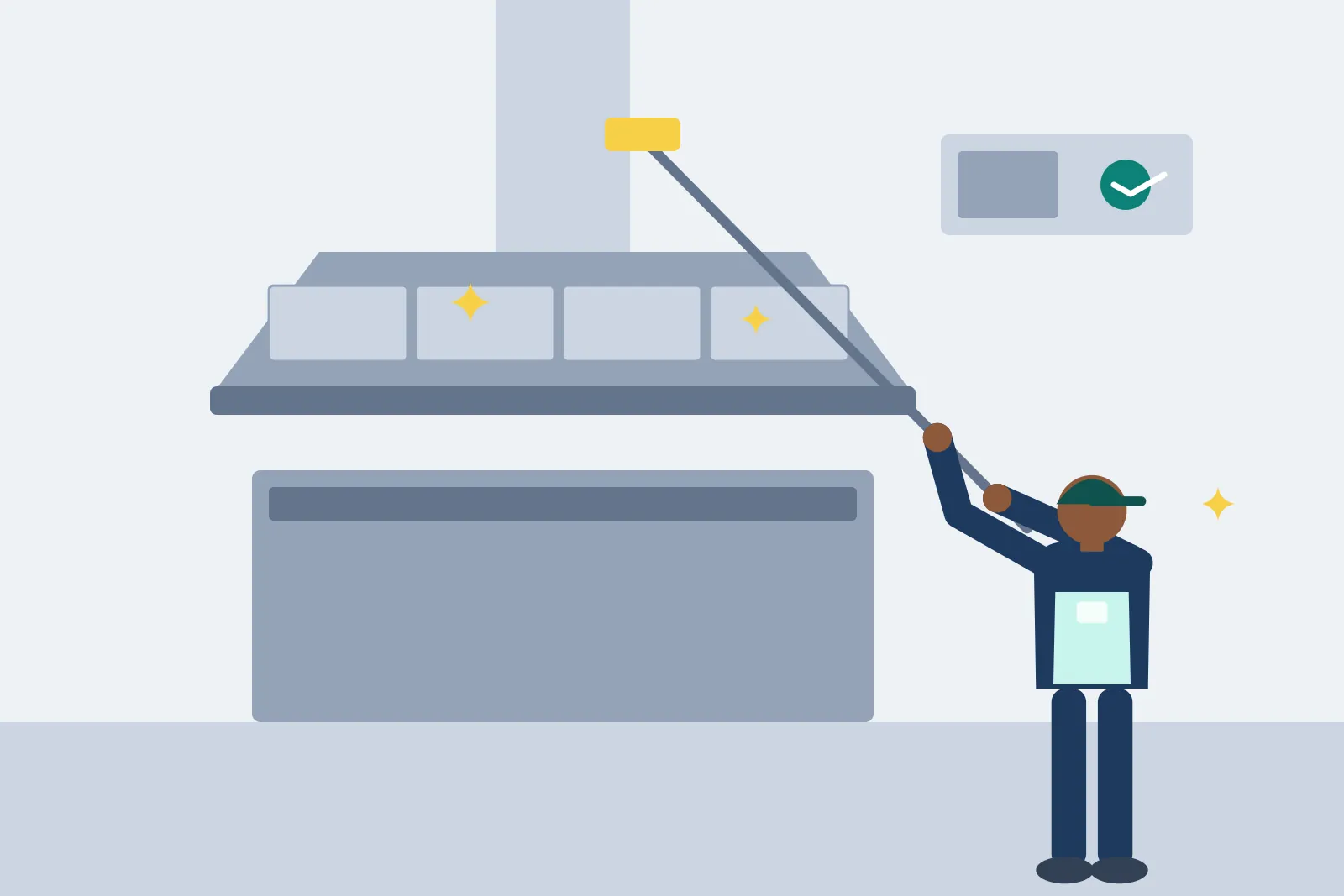
| Monthly or quarterly | Deep clean behind equipment, canopy filters, drains | Upholstery, carpets, high-level dusting |
| Specialist | Extraction ductwork (TR19), grease traps | Beer line cleaning, carpet extraction |
Example structure for a restaurant or pub cleaning schedule. Adapt it to your premises and menu.
Kitchen hygiene essentials
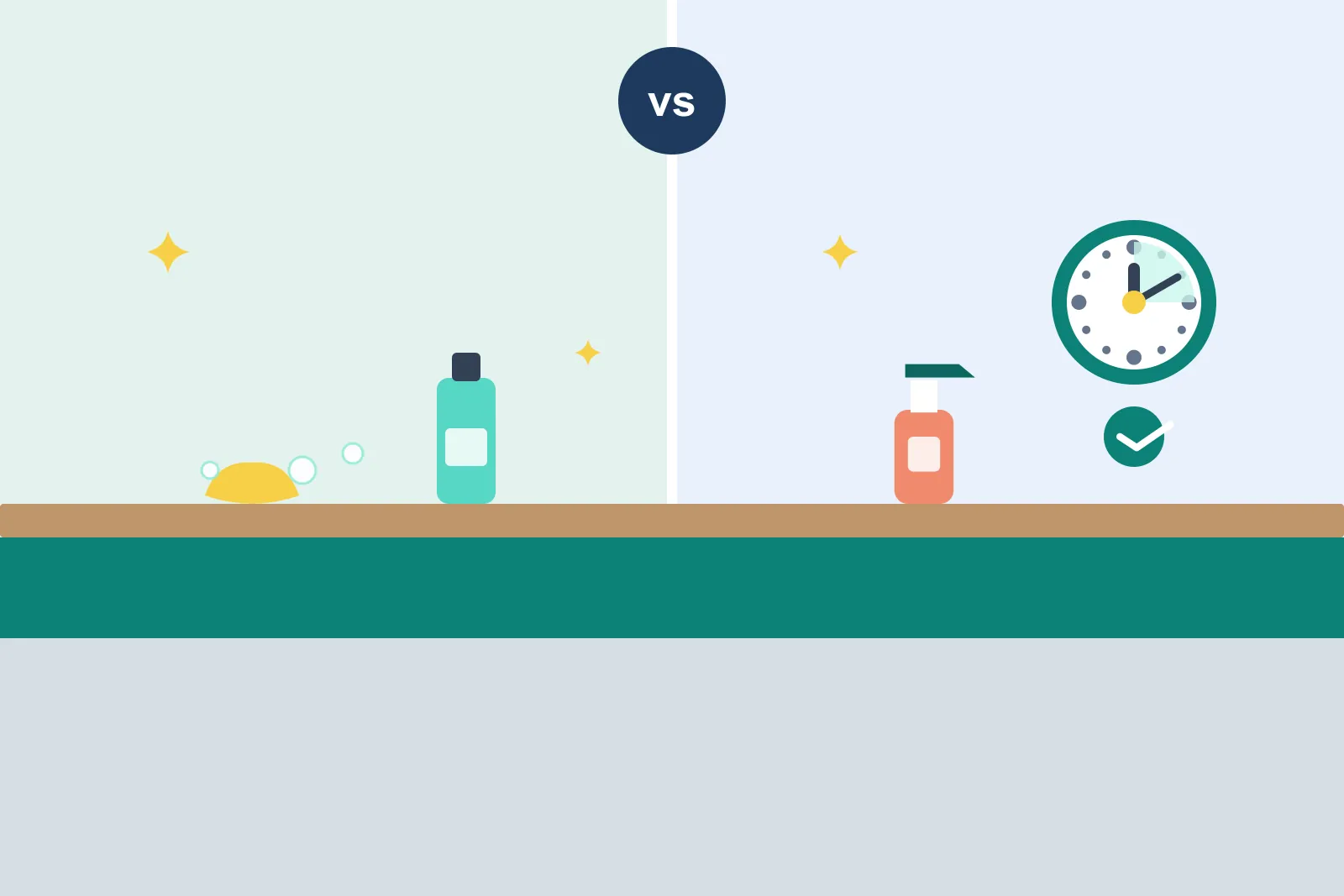
Separate cleaning from disinfecting: remove grease and food residue first, then use a food-safe sanitiser or disinfectant that meets BS EN 1276 or BS EN 13697, for the right contact time. Use colour-coded cloths and chopping boards to prevent cross-contamination – our guide to cleaning vs disinfecting explains why the order matters.
Grease is the biggest challenge. Daily cleaning of fryers, griddles and canopy filters stops build-up, but extraction ducts need specialist cleaning – see kitchen extract cleaning and TR19.
Bars and glassware
Clean bar tops, drip trays and beer taps daily; descale and service glass washers regularly so glasses come out clean and streak-free. Beer lines typically need cleaning every week or two, following the brewery's or supplier's guidance – dirty lines affect taste and waste product. Ice machines and scoops need regular cleaning and sanitising.
Get quotes from local cleaners
Front of house and toilets
Customer toilets should be checked and cleaned throughout opening hours, not just at closing time – a check sheet on the door shows customers they're looked after. Our guide to workplace washroom hygiene covers supplies and frequencies. Dining room carpets and upholstered seating need periodic deep cleaning; low-moisture methods allow areas to be used again quickly.
Using contract cleaners
Many pubs and restaurants do daily cleaning in-house and bring in commercial cleaning contractors for overnight or early-morning deep cleans, kitchen deep cleans, carpet and upholstery cleaning and windows. Specialist kitchen cleaning companies dismantle and degrease equipment, canopies and walls, often working overnight so service isn't disrupted.
Make sure contractors work to your cleaning schedule, use products suitable for food areas, and provide COSHH information – see COSHH and cleaning products.
Preparing for an inspection
Inspectors look for a clean and well-maintained kitchen, a cleaning schedule that's followed and recorded, suitable products and procedures, and staff who know what to do. A deep clean before a planned reopening or after building work is sensible, but the score depends on how the premises are run day to day. Keep cleaning records up to date and make sure every shift knows its tasks.