Why healthcare cleaning is different
Patients in waiting rooms and treatment rooms may be unwell or vulnerable to infection. Cleaning in healthcare settings is therefore part of infection prevention and control, and regulators expect it to be planned, documented and audited. In England, the Care Quality Commission (CQC) looks at cleanliness and infection control as part of its inspections, and practices must meet the Health and Social Care Act 2008 code of practice on infection prevention.
The National Standards of Healthcare Cleanliness 2021, published by NHS England, set out a framework for cleaning in healthcare settings, including primary care, with risk categories, cleaning frequencies, audits and efficacy ratings. Many practices use them as their reference even where they aren't formally required.
Clinical and non-clinical areas
Areas are usually grouped by functional risk. Treatment rooms, minor surgery rooms and dental surgeries are higher risk and need more frequent and thorough cleaning. Consulting rooms, waiting areas, toilets and corridors are moderate risk. Offices and staff areas are lower risk.
Responsibilities are usually split. Clinical staff or dental nurses clean clinical equipment and the immediate patient zone between patients – couches, dental chairs, worktops and equipment – and decontaminate instruments. Cleaners handle the environment: floors, sinks, toilets, high and low surfaces, waste and general areas. A written responsibilities schedule avoids gaps.
Typical cleaning tasks
A typical surgery or practice specification includes:
- Daily cleaning of floors, sinks, taps, toilets and high-touch points
- Disinfecting clinical hand-wash basins and splashbacks
- Cleaning waiting room seating – ideally wipeable rather than fabric
- Emptying general and offensive waste (clinical waste is handled by trained staff and a licensed contractor)
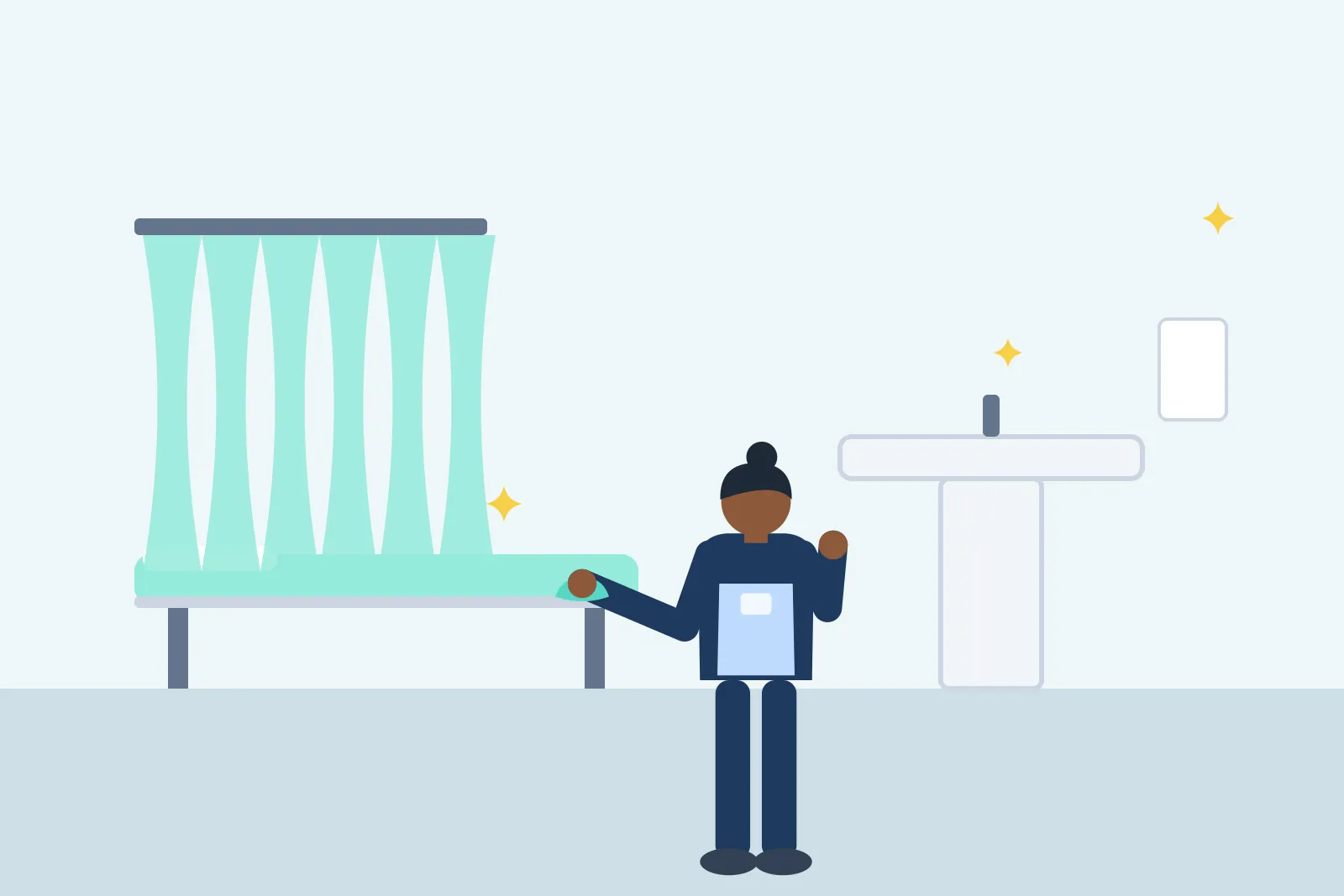
- High-level dusting and cleaning of vents, light fittings and curtain rails
- Changing or cleaning privacy curtains on a set schedule
- Periodic deep cleans of clinical rooms and floors
Products, colour coding and equipment
Healthcare cleaning uses the national colour-coding scheme for cloths, mops and equipment – commonly red for toilets and bathroom floors, blue for general areas, green for kitchens and yellow for isolation areas – so equipment is never used across areas. See colour-coded cloths and mops.
Products should be approved by the practice's infection prevention lead, with disinfectants that meet relevant standards for the organisms of concern and are compatible with surfaces and equipment. Microfibre systems with fresh cloths and mop heads for each room are widely used.
Get quotes from local cleaners
Audits and records
Regular cleaning audits – often monthly for higher-risk areas – check that standards are being met, and results feed back into the schedule. Keep records of cleaning schedules, audits, COSHH assessments, staff training and any incidents. These are the documents inspectors usually ask to see. For COSHH requirements, see COSHH and cleaning products.
Choosing a contractor
Look for a commercial cleaning company with healthcare experience that understands the National Standards of Healthcare Cleanliness, colour coding and infection prevention. Ask how cleaners are trained, how audits are carried out and shared, how they handle sharps and spills, and what DBS checks they do. Out-of-hours cleaning is common, so agree keyholding and security procedures.
Spills, sharps and incidents
Every practice needs a clear procedure for spills of blood and bodily fluids, with spill kits available in clinical areas and staff trained to use them. Cleaners should know when to clean a spill themselves and when to call clinical staff. Sharps found during cleaning should never be handled by hand – report them so they can be disposed of safely.
Record incidents and near misses, and review them with the cleaning team and the infection prevention lead. Changes such as new equipment, new rooms or a change of cleaning products should be reflected in the schedule and the COSHH assessments. See cleaning vs disinfecting for the principles behind clinical cleaning.