What you'll need
Keep a set of toilet-only equipment, so nothing crosses over to the basin or kitchen:
- Toilet cleaner or limescale-removing gel with an angled nozzle
- A toilet brush in a holder you can rinse and dry
- A pumice stone for limescale (optional – wet it first)
- Disposable cloths, or microfibre cloths in a colour used only for the toilet
- A bathroom cleaner or disinfectant spray
- Rubber gloves
Step 1: Put the cleaner in first
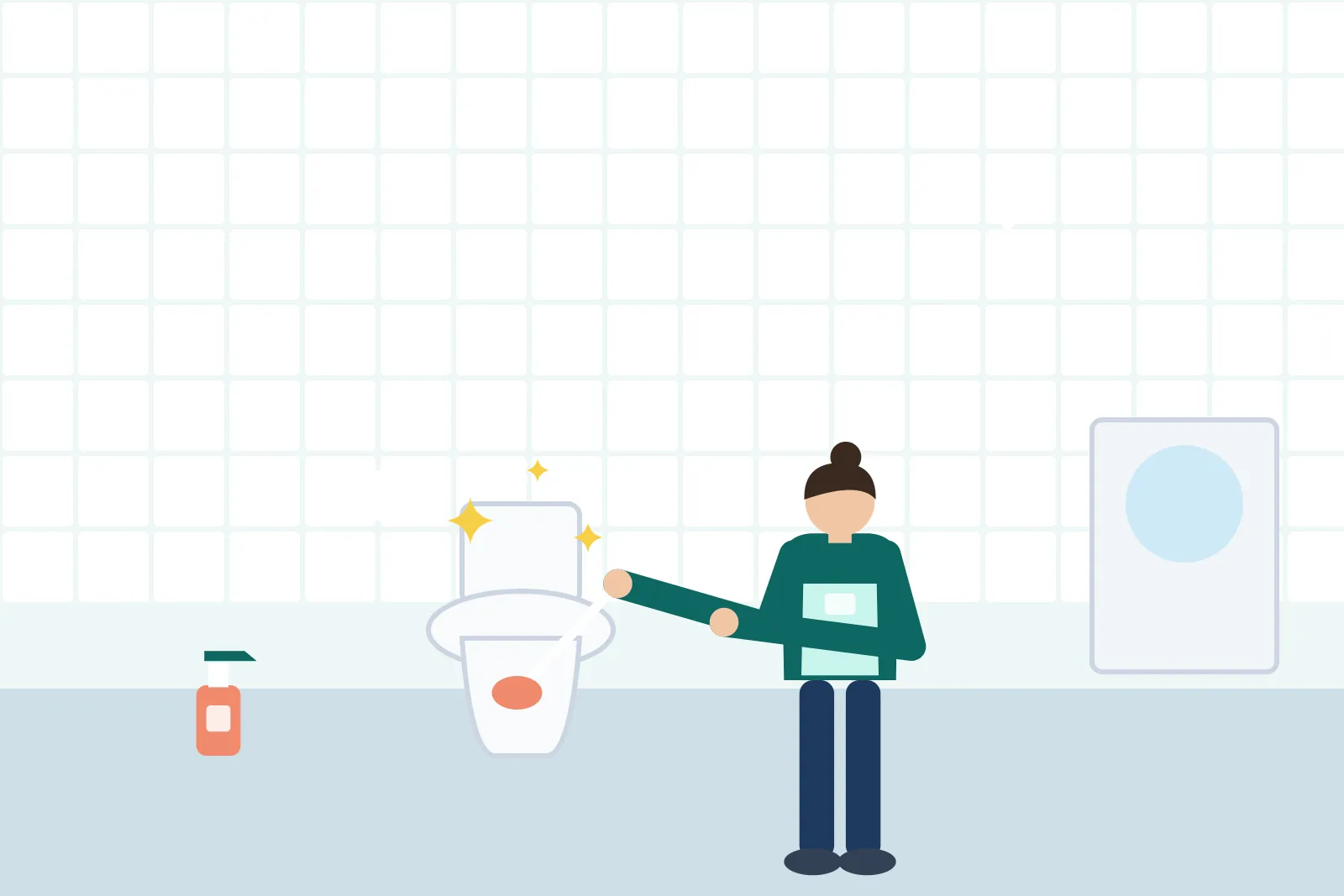
Flush, then squeeze toilet cleaner up under the rim all the way round so it runs down the inside of the bowl. Leave it while you clean the rest. Most products need several minutes to work, and this is the easiest way to give them the time without standing waiting.
Step 2: Clean from the top down, outside first
Spray the cistern, flush handle or button, and the top of the lid with bathroom cleaner and wipe them. Then lift the lid and clean both sides of the lid and seat, and the hinges – where dirt and urine collect. Many modern seats have quick-release hinges: press the buttons or lift and pull the seat off to clean underneath, then click it back.
Finally, clean the outside of the bowl, the pedestal and the base where it meets the floor, and the floor around and behind the toilet. In homes with boys or men, splashes reach the skirting and the wall beside the toilet, and this is often the source of a lingering smell.
Step 3: Scrub the bowl and under the rim
Go back to the bowl and scrub with the brush, starting under the rim. Angle the brush up into the rim holes, where limescale and bacteria build up out of sight. Work down to the water line and into the U-bend opening, then flush with the brush in the bowl to rinse it.
Get quotes from local cleaners
Removing the limescale ring and brown stains
A brown or grey ring at the water line is limescale stained by minerals and waste. To remove it, lower the water level – push the brush quickly in and out of the U-bend a few times – then apply a limescale-removing gel or descaler to the ring and leave it for as long as the label allows, or overnight with some products.
Scrub with the brush, or gently with a wet pumice stone on a vitreous china toilet (keep it wet and use light pressure to avoid scratching). For very heavy scale, repeat over several days rather than reaching for something stronger. Never mix toilet products – bleach-based cleaners and acidic limescale removers together release dangerous gas. Our guide to products you should never mix explains which combinations are unsafe.
Cleaning the toilet brush
After cleaning, rinse the brush in the clean flush water and leave it to drip dry by trapping the handle under the seat over the bowl for a few minutes before returning it to the holder. Empty and wash the holder every week or two – the water that collects in it smells. Replace the brush when the bristles splay.
How often to clean a toilet
A full clean once a week is the norm, with a quick wipe of the seat and handle and a brush of the bowl every couple of days in a busy household. Clean more often – and disinfect touch points – if someone has a stomach bug; our sickness bug cleaning guide covers this.
Professional cleaners spend more time on toilets than most people at home. A regular cleaner will usually clean each toilet thoroughly every visit, while a deep clean or end of tenancy clean adds descaling, removing the seat to clean the hinges and cleaning behind the pedestal. Our bathroom cleaning checklist lists everything else in the room.