The right order
Bathrooms reward a methodical approach. Spray the toilet, bath and shower first so products have time to work while you dust and tidy. Then clean from the cleanest areas to the dirtiest – mirror and sink before the toilet – and finish with the floor.
Keep separate cloths for the toilet and for everything else. Colour-coding (a particular colour just for the toilet) is how professional cleaners avoid cross-contamination, and it's easy to copy at home.
Weekly bathroom cleaning
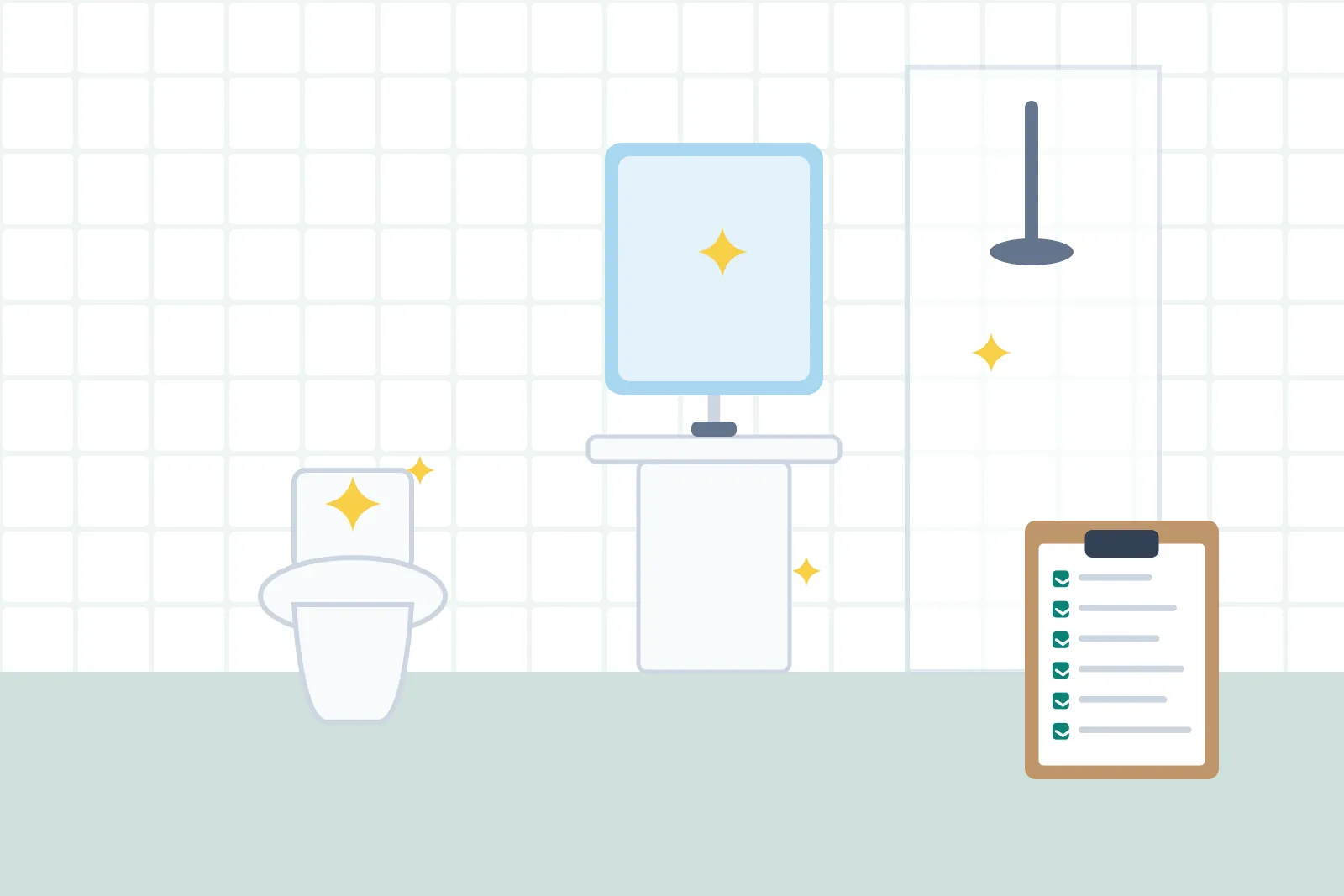
Around 20–30 minutes for an average bathroom:
- Clear surfaces and put away toiletries
- Clean the mirror and any glass
- Clean the sink, taps and plughole
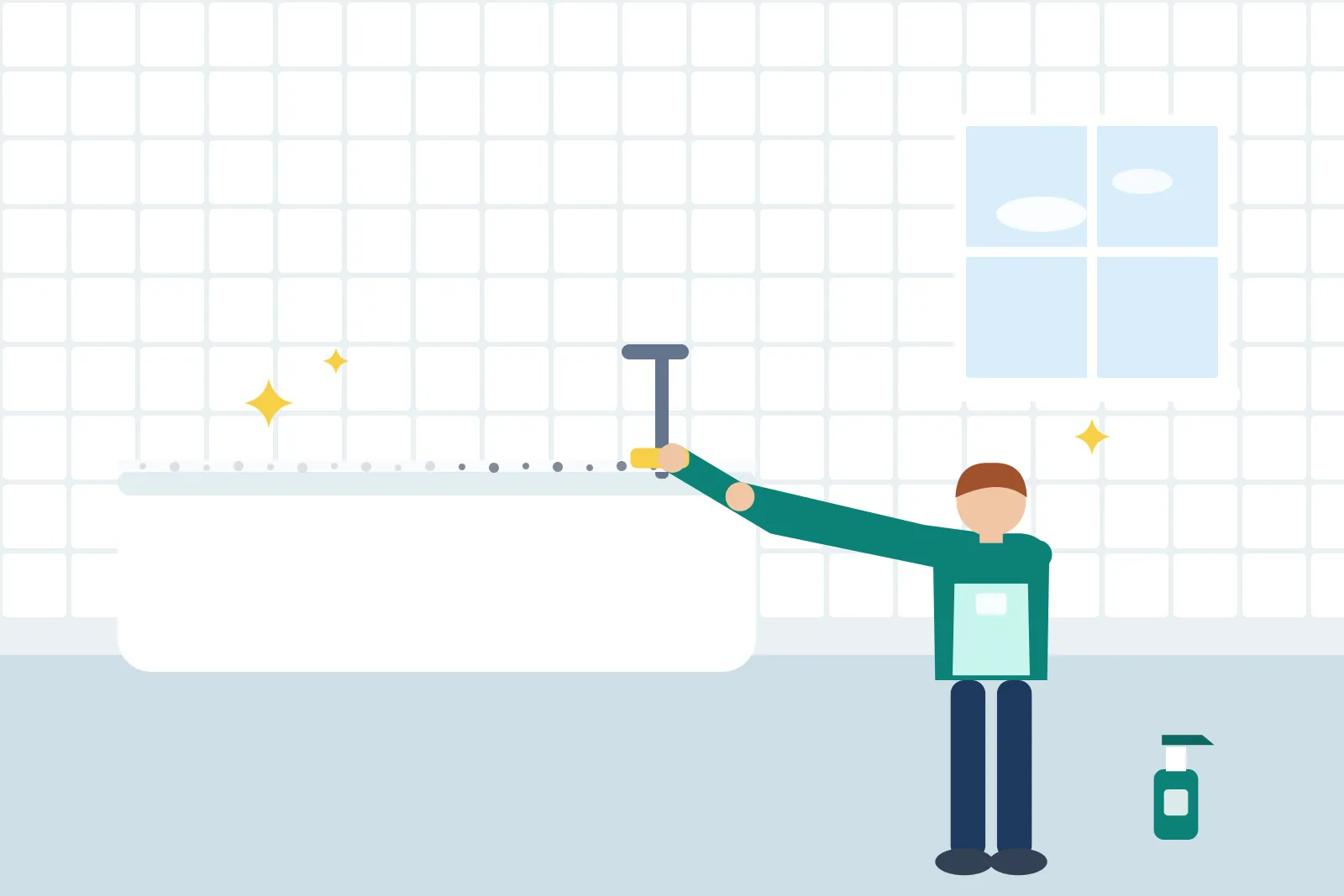
- Clean the bath and shower, including the tray and screen
- Clean the toilet inside and out – seat, hinges, base and flush handle
- Wipe light switches, door handles and the towel rail
- Empty the bin
- Vacuum and mop the floor, including behind the toilet
- Change towels and the bath mat
Monthly jobs
Once a month, add these to the weekly routine:
- Descale taps and the shower head
- Wash the shower curtain or clean the screen thoroughly
- Wipe down tiles and scrub grout lines
- Clean the extractor fan cover
- Wipe inside cabinets and throw away old products
- Wash the toilet brush holder
- Clean skirting boards and the door
A bathroom deep clean
Every few months, or before a move or sale, go further. A deep clean includes descaling every surface, treating mould on sealant and window frames, cleaning behind the toilet and around the base where it meets the floor, cleaning the bath panel and the area behind it if accessible, wiping the ceiling and high corners, and cleaning the window inside.
If your bathroom has a lot of limescale or mould, see our guides to removing limescale and getting rid of bathroom mould.
Products you actually need
You don't need a different spray for every surface. A bathroom cleaner, a limescale remover (if you're in a hard water area), a toilet cleaner, microfibre cloths, a non-scratch sponge and a squeegee will cover almost everything. Read labels, follow directions and never mix products – particularly bleach with anything acidic or ammonia-based.
Get quotes from local cleaners
The bits people forget
These are the areas that make a bathroom look 'nearly clean':
- The underside of the toilet rim and the hinges of the seat
- The top of the door and the door frame
- The overflow hole in the sink
- The bath panel and the floor in front of it
- Toothbrush holders and soap dishes
- The extractor fan, which loses suction when clogged with dust
Small daily habits that save time
The difference between a bathroom that takes 20 minutes to clean and one that takes an hour is mostly what happens in between. A few seconds after each use stops build-up before it starts.
- Squeegee the shower screen and tiles after showering
- Rinse the sink after brushing teeth to stop toothpaste drying on
- Hang towels out to dry rather than leaving them on the floor
- Leave the extractor running for 15–20 minutes after showers
- Keep surfaces clear so they can be wiped in seconds
Cleaning a bathroom used by a family
Family bathrooms collect bath toys, splashes, toothpaste and the occasional wet towel mountain. Bath toys can harbour mould inside – squeeze out the water after each bath and wash them regularly, or choose toys without holes.
Keep cleaning products in a high or locked cupboard if you have young children, and choose a toilet brush holder that's easy to clean. With several people using one bathroom, a quick wipe of the toilet seat, sink and taps mid-week can make a big difference between full cleans.
Handing it over
Bathrooms are one of the main reasons people hire a regular cleaner. A typical regular clean covers all the weekly tasks above, while monthly and deep clean jobs are usually done on rotation or as an extra. Our domestic cleaning checklist shows what a regular clean usually includes across the home.