Why gyms need extra attention
Shared equipment is touched by dozens of people a day, often with sweaty hands. Mats, benches and pads are in direct skin contact. Changing rooms and showers are warm and damp – ideal conditions for fungal infections such as athlete's foot and for mould. Members expect visible cleaning, and poor hygiene is a common reason for cancellations and negative reviews.
Equipment cleaning
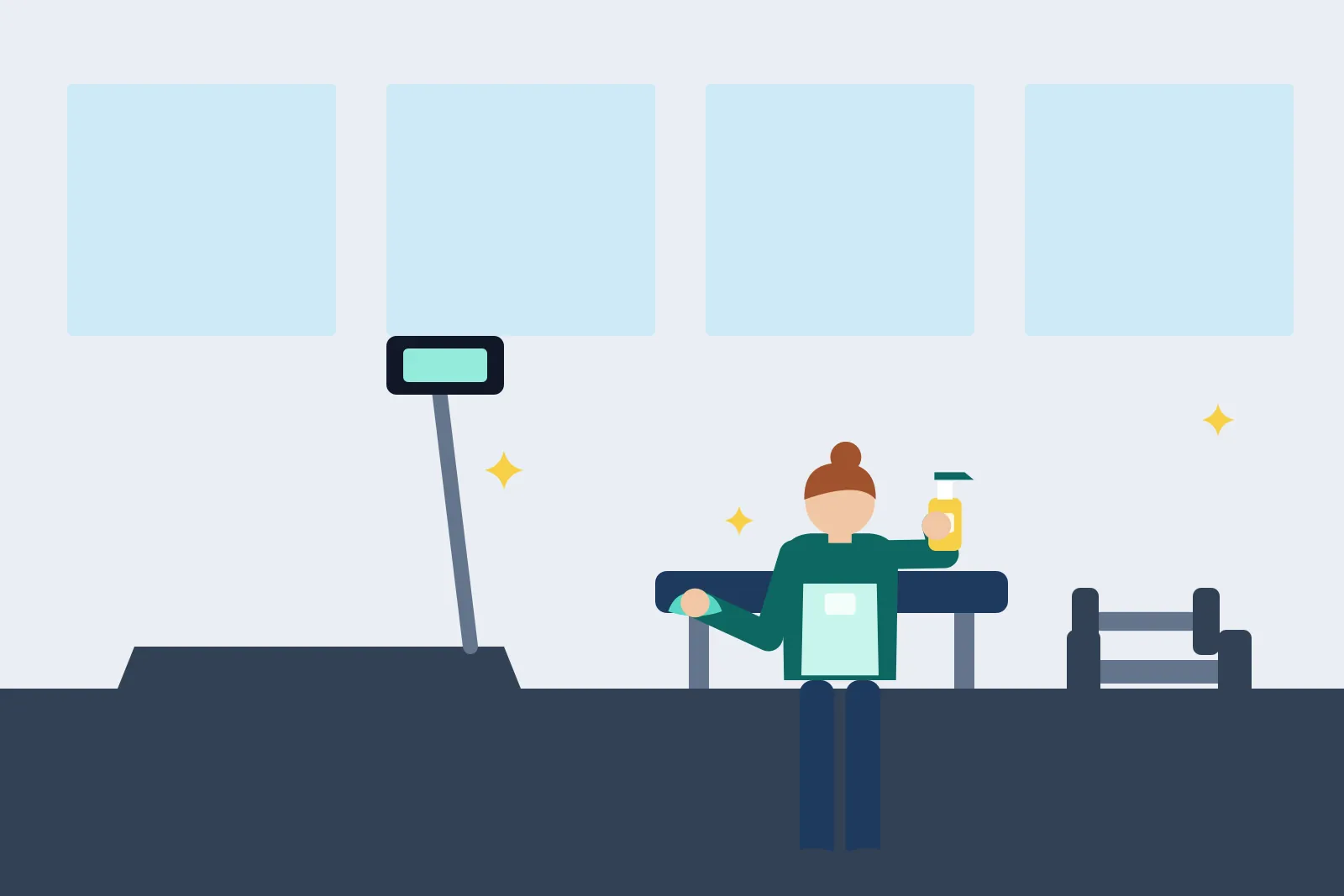
Most gyms provide wipe stations with disinfectant spray and paper towels, and ask members to wipe equipment after use. That helps, but it isn't enough on its own. Staff or cleaners should also wipe down all equipment touch points – handles, grips, seats, pads, consoles and dumbbells – at least daily, and more often in busy periods.
Use products recommended or approved by the equipment manufacturers, which are usually non-abrasive, alcohol-free or low-alcohol disinfectants that won't damage upholstery, rubber or screens. Harsh chemicals can crack vinyl pads and void warranties.
Mats, studios and floors
Yoga mats, exercise mats and studio floors need cleaning after each class or session. Rubber gym flooring should be vacuumed or swept daily and mopped with a neutral cleaner suitable for rubber – strong solvents and some disinfectants can damage it. Studio sprung floors need cleaning to the manufacturer's guidance, avoiding excess water.
Changing rooms, showers and toilets
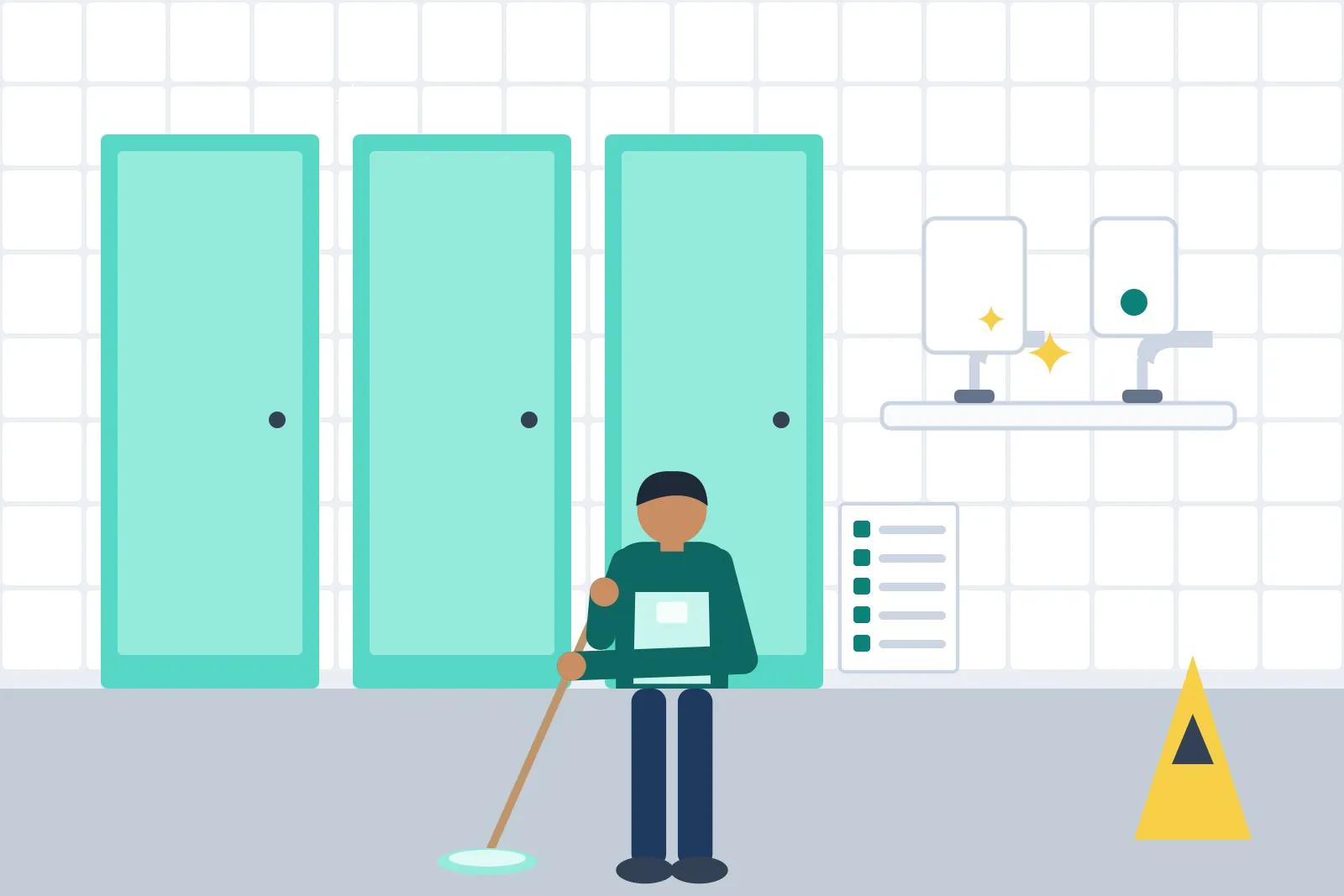
Changing areas usually need the most frequent attention:
- Check and clean throughout opening hours, using a visible check sheet
- Disinfect benches, lockers, taps, door handles and hand dryers daily
- Clean showers, floors and drains daily to prevent fungal growth
- Squeegee wet floors regularly to reduce slips
- Treat grout and sealant to keep on top of mould
- Keep soap, paper and sanitary bins stocked and emptied
Get quotes from local cleaners
A typical schedule
Many gyms combine in-house cleaning during opening hours with a contract clean overnight or early in the morning. Staff handle wipe stations, spills and changing room checks; contractors do floors, deep clean changing rooms and showers, clean mirrors and glass, empty bins and wipe all equipment thoroughly. Periodic tasks include deep cleaning rubber floors, cleaning ventilation grilles, descaling showers and carpet cleaning in reception areas.
Our guide to workplace washroom hygiene covers changing room supplies and legal minimums, and colour-coded cloths and mops explains how to avoid cross-contamination between toilets and equipment.
Choosing a cleaning contractor
Look for a commercial cleaning company with experience of gyms or leisure centres, which knows equipment-safe products and can work around early opening and late closing. Ask how they'll clean each equipment type, how often changing rooms will be checked, and how they'll report issues. 24-hour gyms need cleaning schedules that work around members at all hours. See how to choose an office cleaning company for general contractor selection tips.
Ventilation, smells and hard-to-reach areas
Gyms can develop a stale smell from sweat, damp changing rooms and rubber flooring. Good ventilation does more than air fresheners: make sure extractor fans in showers and changing rooms work and are cleaned regularly, and that air handling grilles in the main gym are on the cleaning schedule.
Less obvious areas need periodic attention too – behind and under machines, inside lockers, the tops of mirrors and lockers, ceiling fans and the skirting along walls where dust and hair collect. A monthly or quarterly deep clean, often done overnight, deals with these. Mats and pads that are cracked or torn can't be cleaned properly and should be repaired or replaced.