What makes driveways dirty
Driveways collect tyre marks, oil and fuel drips, tree sap, leaf stains, moss and algae in shaded areas, and weeds in the joints. Block paving is the most popular driveway surface in the UK, and its many joints are where most of the work is: sand washes out, weeds and moss grow in, and the blocks can become uneven.
Block paving
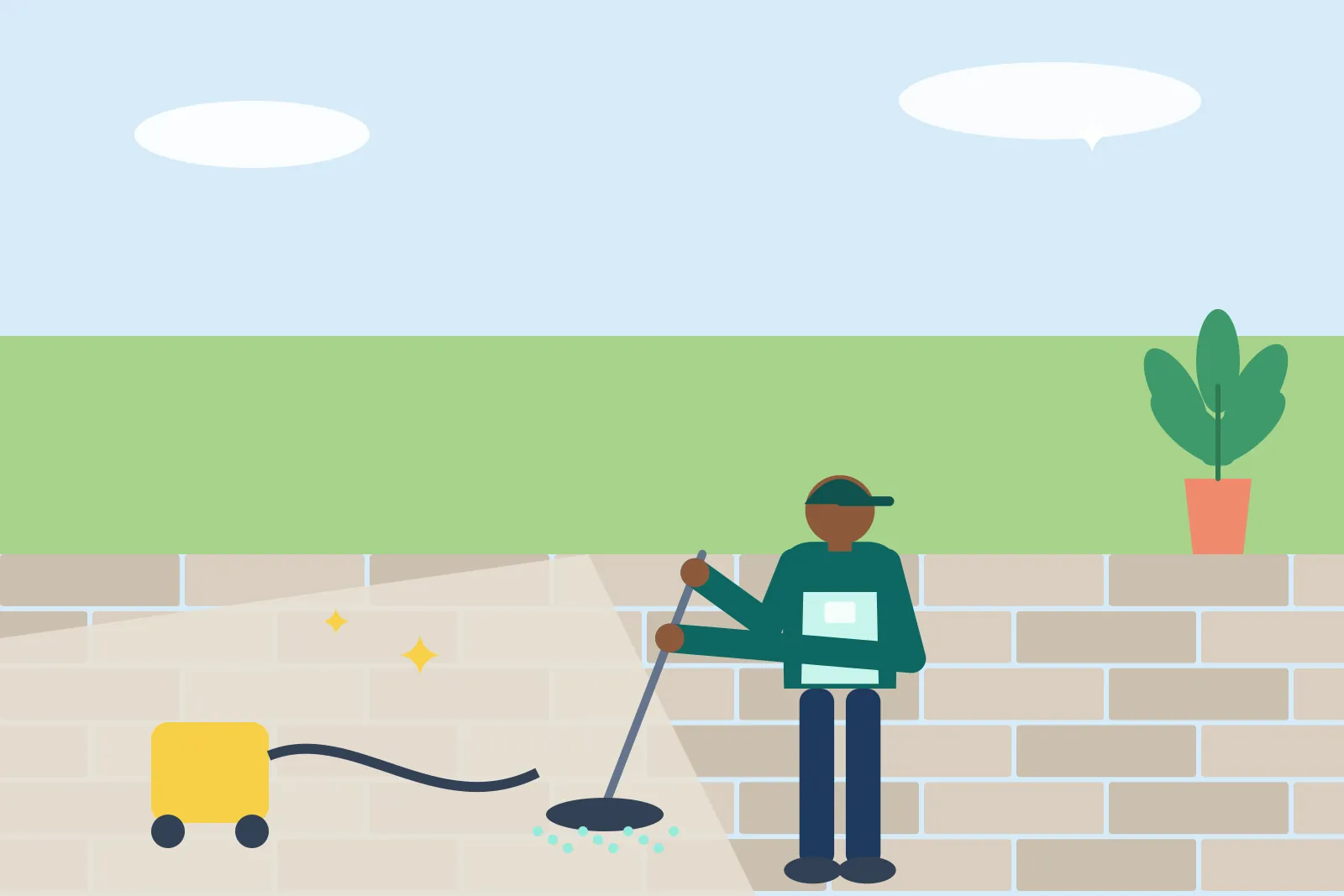
Start by removing weeds and moss from the joints with a weeding tool or a stiff wire brush. Sweep thoroughly. A pressure washer with a rotary surface cleaner attachment gives the most even result and is gentler on joints than a straight lance. If using a lance, hold it at a shallow angle and work along the joints, not across them.
Once the paving is completely dry – often a day or two later – brush kiln-dried sand into the joints until they're full. This locks the blocks together and makes it harder for weeds to establish. A block paving sealer can then be applied if you want to reduce weed growth and oil staining and enhance the colour; it typically needs reapplying every few years.
Tarmac and asphalt
Tarmac is softer than it looks and can be damaged by a powerful, close pressure washer jet and by solvents that dissolve the bitumen binder. Sweep, then clean with warm water, a stiff brush and a mild detergent, or a pressure washer on a lower setting with a fan nozzle held well back. Avoid petrol-based degreasers, which can break down the surface.
Concrete and imprinted concrete
Plain concrete can usually handle a pressure washer and stiff brushing. Imprinted (pattern) concrete driveways have a sealed, coloured surface; harsh cleaning can strip the sealer and fade the colour. Clean them with a mild detergent and a soft brush or low-pressure wash, and reseal every few years as recommended by the installer.
Get quotes from local cleaners
Resin-bound and resin-bonded driveways
Resin-bound driveways (stones mixed in resin) are porous and fairly low maintenance. Sweep regularly, clean with warm soapy water and a stiff brush, and use a pressure washer only on a low setting if the installer allows it. Resin-bonded surfaces (loose stones scattered onto resin) can lose stones under high pressure. Ask your installer for their care guidance – it may affect the guarantee.
Oil, fuel and tyre marks
Oil is the stain people most want removed, and it's easiest when fresh:
- Cover fresh oil immediately with cat litter, sawdust or sand to soak it up; leave it for a few hours, then sweep up
- Scrub the remaining mark with washing-up liquid and hot water, or a driveway oil remover suitable for your surface
- Older oil stains may need several applications of an oil remover or poultice
- Tyre marks on block paving and concrete usually lift with a degreaser and pressure washing
- Avoid solvent degreasers on tarmac and resin surfaces
Run-off and the environment
Driveway washing water often carries oil, detergent and silt. Don't let it run into roadside drains, which usually lead to rivers. Where possible, let it soak into a garden, sweep up the residue, or direct it to a gully connected to the foul sewer. Professional driveway cleaners should have a plan for run-off – it's worth asking.
Hiring a driveway cleaner
Driveway and patio cleaning is a common service from exterior cleaning companies, often priced per square metre with re-sanding and sealing as optional extras. Ask how they'll clean your type of surface, whether re-sanding is included, how long you'll need to keep cars off it, and whether they're insured. Be cautious of unsolicited doorstep offers to clean or 'reseal' driveways for cash – they're a known route for poor workmanship and overcharging. Our guide to cleaning scams and red flags covers what to watch for.
Many firms also clean patios, paths and gutters on the same visit, which can reduce the overall cost.