The first visit
It's worth being at home for at least the start of the first clean. You can show the cleaner around, explain your priorities, point out anything delicate or off-limits and agree how they'll get in for future visits. It also gives you both a chance to see if you get on.
Regular visits
Once the routine is established, most households aren't at home during cleans. Cleaners often find it easier and quicker to work in an empty house, and you come home to a clean one. You'll need to arrange access – see giving a cleaner keys safely.
If you work from home
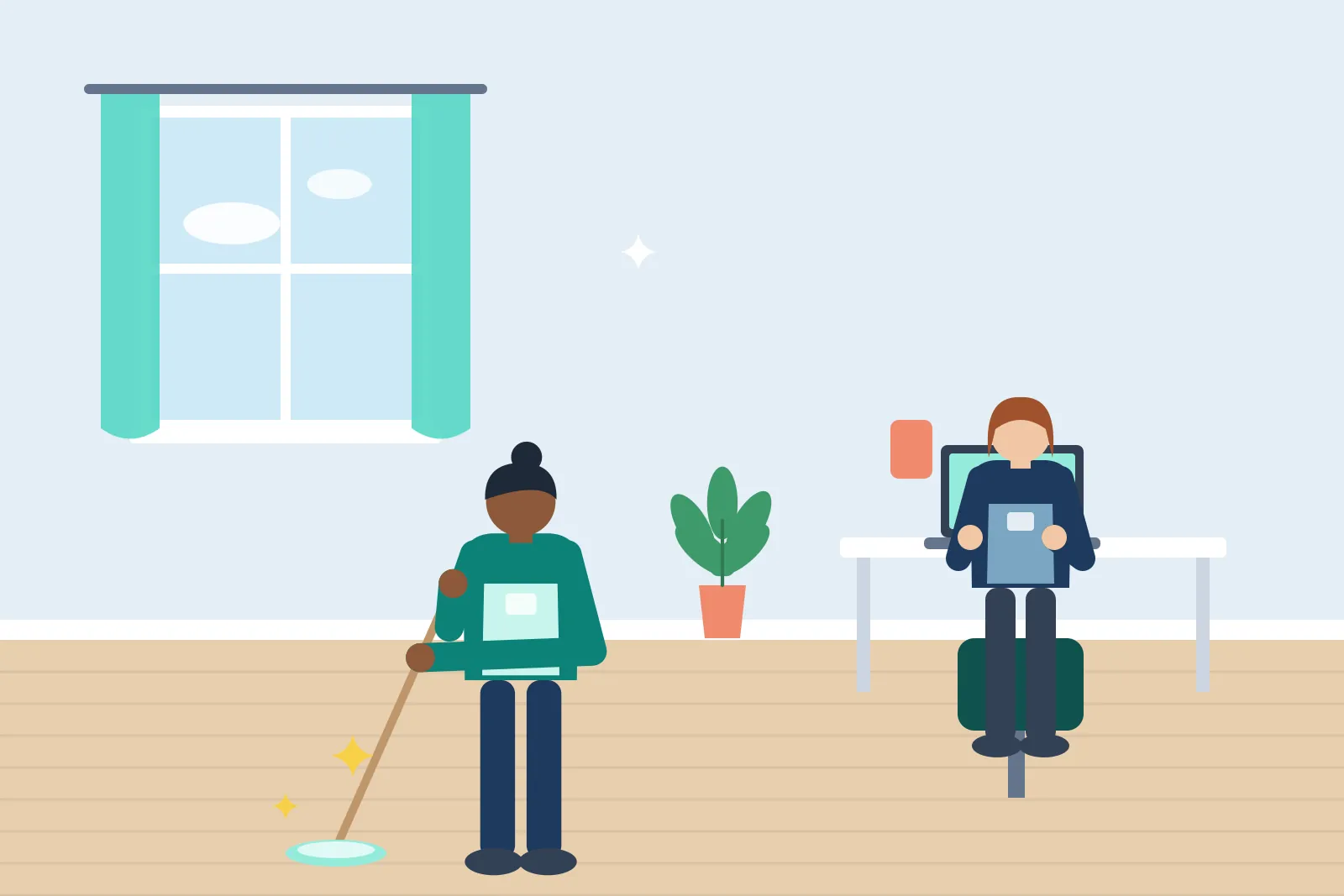
Plenty of people now work from home on cleaning days, and it works fine with a little planning. Agree which room you'll be in, and have that room cleaned at the start or end of the visit, or on a different day. Noise from vacuuming is the main issue – let the cleaner know if you've got important calls and when.
Making it work either way
Whether you're in or out, a few small habits help every visit go smoothly:
- Leave a short note or message for anything specific that week
- Tidy enough for surfaces and floors to be cleaned
- Secure pets or let the cleaner know where they'll be
- Leave products and equipment out if you supply them
- Agree how you'll pay – bank transfer is easiest when you're out
Get quotes from local cleaners
When it's better to be there
For one-off deep cleans, end of tenancy cleans and anything involving valuable or delicate items, it can help to be at home at the start and end so you can check the work together. For carpet cleaning, you'll want to be around to move small furniture and know when carpets will be dry.
Leaving notes and instructions
A short note or message before each visit helps, especially when you're out. Use it for anything that's different that week – the guest room needs doing, the oven needs attention, a room should be left alone. Keep it short and specific.
Many people use a shared note on their phone or a small notebook left on the kitchen table. Cleaners can reply with anything you need to know, such as a product running low.
Privacy and personal items
It's completely reasonable to keep some areas private. Tell your cleaner which rooms, drawers or desks not to touch. Put away valuables, important documents and anything sentimental, not because cleaners are untrustworthy, but because it removes any worry for both of you.
Checking the work
If you're out, have a quick look around when you get home. If something's been missed, let the cleaner know politely and soon – most would much rather fix it than have you quietly unhappy. Our guide on what to do if you're unhappy with a clean helps if there's a bigger problem.