Equipment first
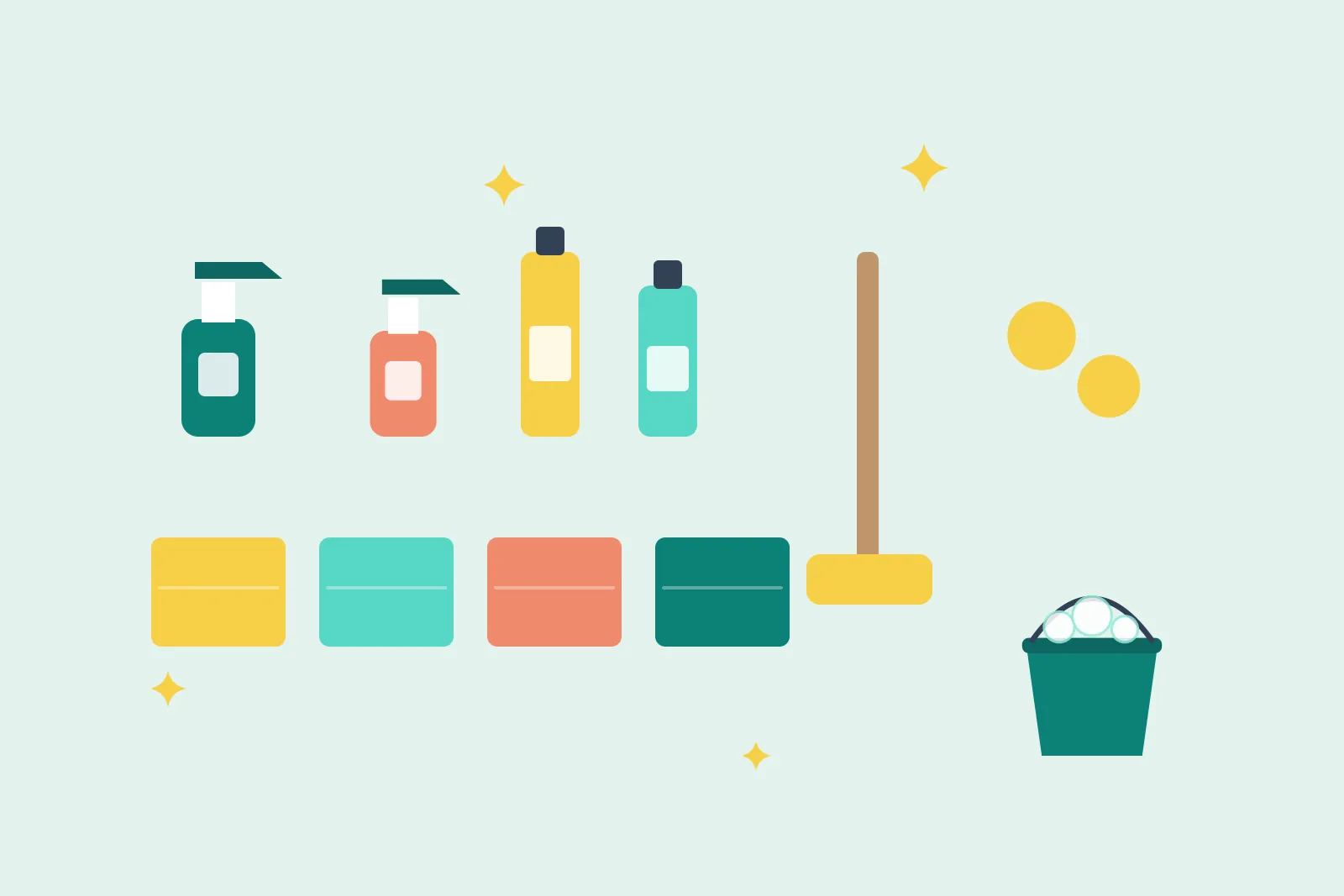
Good tools matter more than products. The basics:
- A vacuum cleaner with a crevice tool and brush attachment
- A flat microfibre mop and a bucket (or spray mop)
- A pack of microfibre cloths in at least three colours
- A dustpan and brush, and a soft broom
- A toilet brush and holder for each toilet
- Rubber gloves
- A non-scratch sponge or scourer pack
- An old toothbrush or small detail brush
- A squeegee for the shower
- A step stool for reaching high shelves safely
Products: the short list
Most homes can manage with six or seven products. Washing-up liquid is the most versatile cleaner you own – a few drops in warm water cleans most surfaces. Add a multi-surface spray for convenience, a bathroom cleaner or limescale remover (depending on your water), a toilet cleaner, a cream cleaner for sinks and baths, and a glass cleaner or vinegar mix for windows and mirrors.
Add a disinfectant spray for kitchen surfaces after raw meat and for illness, and a floor cleaner suitable for your floors. That covers almost everything.
Useful extras
Buy these when you need them:
- Bicarbonate of soda – a gentle scrubbing paste and deodoriser
- White vinegar – for limescale and glass (not on stone)
- A melamine sponge for scuffs on walls and doors (use gently)
- A lint roller for upholstery and pet hair
- A grout brush
- An extendable duster for cobwebs and high places
- Oven cleaner suitable for your oven, used occasionally
Products you can usually skip
Many single-purpose sprays duplicate what your basics already do. Separate kitchen, bathroom, glass, wood, stainless steel and granite sprays add up quickly. Air fresheners mask smells rather than remove them – see how to make your house smell fresh. Spray furniture polish builds up on wood and isn't necessary with microfibre.
Specialist products are worth buying only when you have the matching surface: a stone-safe cleaner for marble or granite, a stainless steel polish, or a wood floor cleaner.
Get quotes from local cleaners
Hard water? Add a descaler
In hard-water areas such as London, the South East and East Anglia, a dedicated limescale remover for bathrooms and a kettle descaler save time. In soft-water areas – much of Scotland, Wales, the North West and the South West – a general bathroom cleaner is usually enough. Our limescale guide explains which products suit which surfaces.
Storing products safely
Keep products in their original containers, out of reach of children and pets, and away from food. Store bleach and acidic products apart, and never mix them – see cleaning products you should never mix. A caddy you can carry from room to room makes cleaning quicker and keeps everything together.
If you hire a cleaner
Some cleaners bring their own products and equipment; others use yours. If they use yours, a good vacuum and a supply of clean cloths make the biggest difference to how much gets done. Our guide on whether cleaners should bring their own products weighs up the options, and eco-friendly cleaning covers greener alternatives.
Building a kit on a budget
If you're starting from scratch, prioritise equipment over products: a decent vacuum, a flat mop and a good set of microfibre cloths will do more for your home than any number of sprays. Buy products in larger refillable sizes once you know what you use, and avoid duplicates – most homes need one multi-surface spray, not three.
Many supermarkets' own-brand products work just as well as big brands. Concentrated products diluted into reusable spray bottles reduce cost and packaging. Our guide to eco-friendly cleaning covers refill options and greener choices.