The short answer
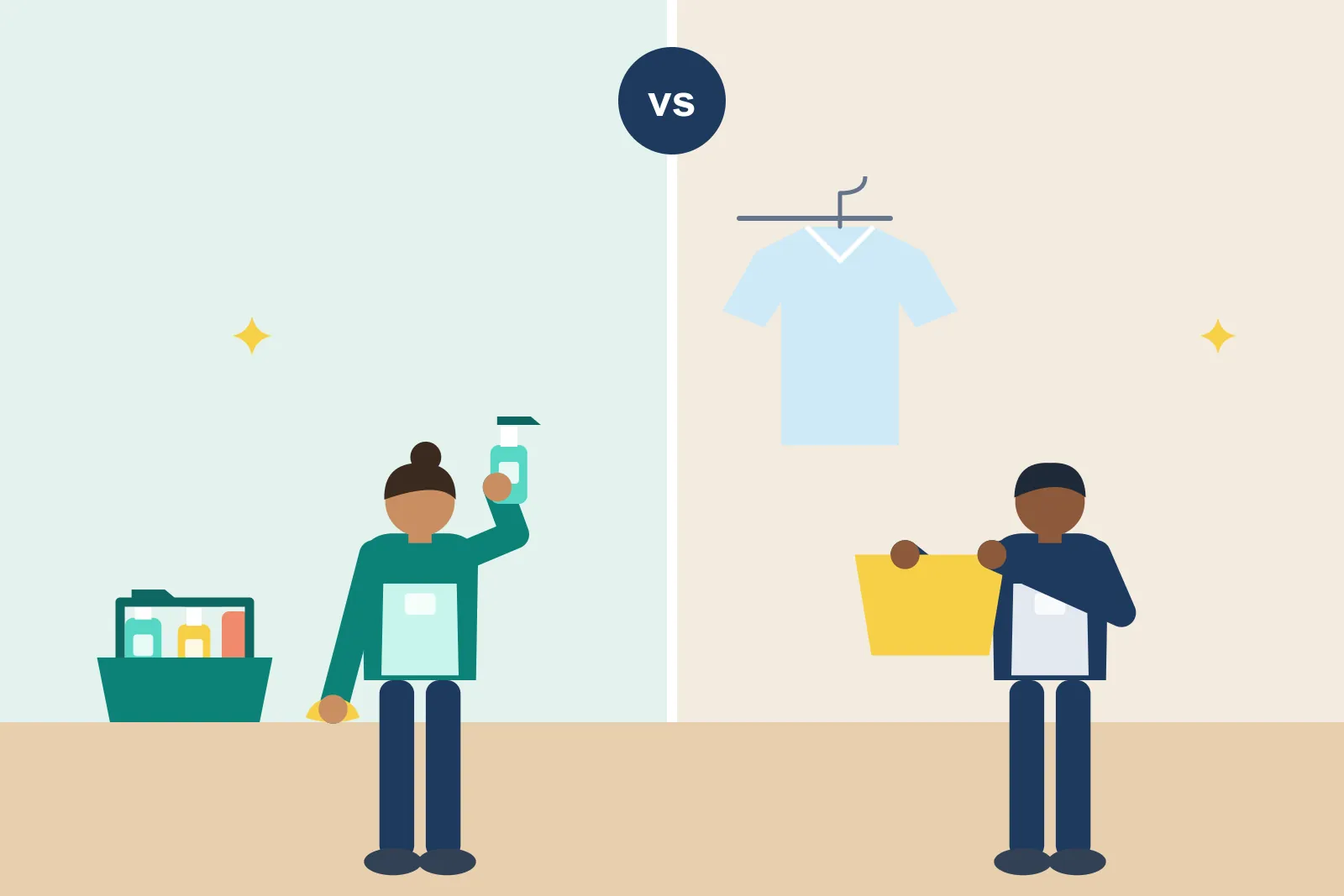
A domestic cleaner visits for a set number of hours, usually weekly or fortnightly, and focuses on cleaning: kitchens, bathrooms, dusting, vacuuming and mopping, sometimes with changing beds and ironing. A housekeeper typically works more hours – often several days a week – and handles a wider range of household tasks, including laundry, ironing, tidying, organising, shopping and sometimes simple meal preparation.
Side by side
The main differences at a glance:
| Domestic cleaner | Housekeeper | |
|---|---|---|
| Hours | 2–4 hours a week or fortnight | Often 10–40 hours a week |
| Main focus | Cleaning to a checklist | Running the household day to day |
| Laundry and ironing | Sometimes, as an add-on | Usually part of the role |
| Tidying and organising | Light tidying | Organising cupboards, wardrobes, storage |
| Errands and shopping | Rarely | Often |
| Managing trades and deliveries | No | Often lets in trades and receives deliveries |
| Employment status | Usually self-employed or via a company | Often employed directly |
Typical differences between a domestic cleaner and a housekeeper. Individual arrangements vary.
When a cleaner is the right choice
For most households, a regular cleaner is enough. If your main problem is finding time to clean the bathrooms, kitchen and floors properly, two to four hours a week or fortnight from a reliable domestic cleaner solves it. You can add ironing or changing beds to the visit if needed.
Our guide to how many hours a cleaner needs helps you work out the right visit length, and the domestic cleaning checklist shows what a regular clean usually covers.
When a housekeeper makes more sense
A housekeeper suits households where the workload goes well beyond cleaning:
- Large homes where cleaning alone takes a couple of days a week
- Busy families with a lot of laundry, ironing and daily tidying
- Households where both adults work long hours or travel
- Homes with frequent guests or a holiday home to keep ready
- Older people who need practical help to stay independent at home
- When you need someone to let in trades, receive deliveries or check on the house
Get quotes from local cleaners
Employment and cost
Most domestic cleaners are self-employed or work for a cleaning company, which means you pay for the service and they handle their own tax and insurance. Housekeepers who work set hours under your direction are often your employee, which brings employer responsibilities such as paying at least the National Minimum Wage, holiday pay, possibly running payroll and employer's liability insurance. Our guide to employing a cleaner directly explains these obligations.
A housekeeper costs more overall because of the hours involved, but the hourly rate may be similar to or lower than a cleaner from an agency. Housekeeper agencies charge a placement fee or an ongoing commission.
Something in between
Many households end up with a hybrid: a regular cleaner for longer weekly visits with laundry and ironing included, or a cleaner plus a separate ironing service. Some cleaning companies offer 'cleaner-housekeeper' packages for larger homes. Our ironing services guide covers the options for laundry.
Finding the right person
Whichever you choose, write down exactly what you want done and how often, and share it when you ask for quotes or interview. Check references, insurance and right to work, and agree a trial period. Our guides on finding a reliable cleaner and trial cleans cover the process.
Questions to ask before you decide
Start with a list of everything you want help with and how long it takes you now. If it's mostly cleaning and fits into a few hours a week, a cleaner is enough. If the list includes laundry, ironing, shopping, organising, letting in trades and preparing for guests, and adds up to a day or more each week, a housekeeper or a hybrid arrangement may suit you better.
Think about budget, how much management you want to do and whether you're comfortable being an employer. A cleaning company handles employment and cover; a directly employed housekeeper gives you more control but brings more responsibility. Our guide to employing a cleaner directly explains what that involves.