Why it matters
Clutter adds time to every clean. Surfaces have to be cleared before they can be wiped, floors can't be vacuumed properly and dust collects on everything. If you're paying by the hour, time spent moving your things is time not spent cleaning. And a decluttered home is simply quicker to keep clean afterwards.
Start small
Decluttering a whole house feels overwhelming, so don't. Pick one drawer, one shelf or one cupboard and finish it. Then another. Momentum comes from seeing results, not from big plans.
The four-box method
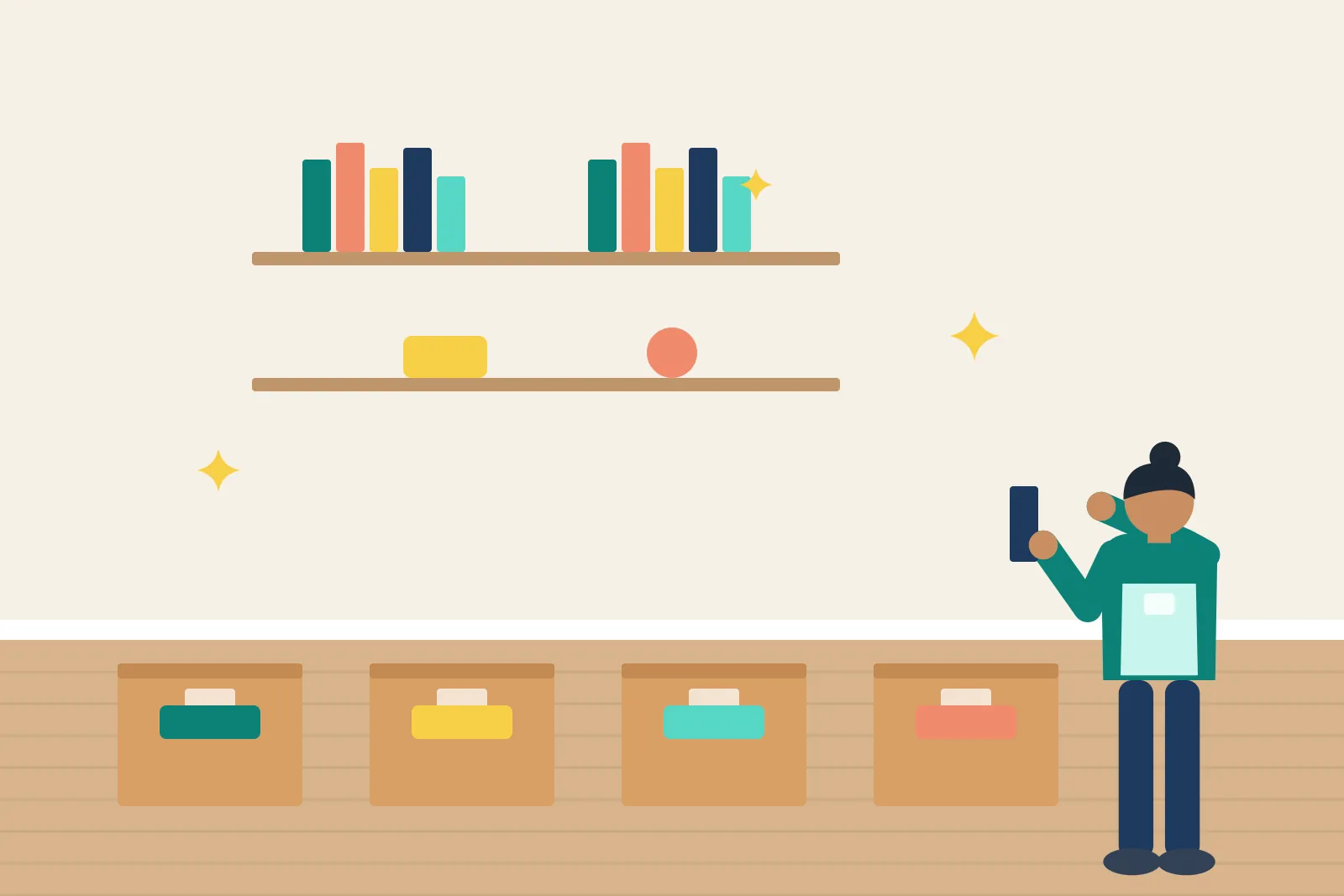
Take four boxes or bags into each room:
- Keep – things you use or love, which have a place to live
- Donate or sell – things in good condition you no longer need
- Recycle – paper, packaging and anything your council collects
- Bin – broken, expired or unusable items
Room by room
Every room has its own clutter hotspots. Work through them one at a time.
Kitchen
Clear the worktops of everything you don't use daily. Check dates in cupboards and the fridge, recycle old takeaway menus and pair up plastic tubs with their lids – recycling the orphans.
Bathroom
Throw away empty bottles, expired medicines (return those to a pharmacy) and products you'll never use. Keep surfaces as clear as possible – it makes weekly cleaning much quicker.
Bedrooms
Sort clothes you haven't worn in a year, clear the floor and bedside tables, and empty under the bed if you can.
Living areas and hallways
Gather up stray items, find homes for remote controls and chargers, and tackle the pile of shoes and coats by the door.
Get quotes from local cleaners
Before the cleaner arrives
On the day, a quick tidy – clothes off the floor, dishes in the dishwasher, paperwork into a pile – means the cleaner can get straight to cleaning. Tell them about any areas you'd like left alone, such as a desk with papers. See our guide on how to prepare for a cleaner.
When it feels overwhelming
If the amount of stuff feels paralysing, you're not alone. Start with the easiest wins: rubbish, packaging, duplicates and things that are clearly broken. Then move on to items you know you don't use. Leave sentimental things until last, when you've got into the rhythm.
If clutter is causing real distress or affecting how someone can use their home, a professional organiser or, where hoarding is a concern, a GP or specialist support service may help.
Getting rid of things responsibly
Most of what you clear out can be reused or recycled:
- Charity shops for clothes, books, homeware and toys in good condition
- Online marketplaces and local groups for furniture and larger items
- Council bulky waste collections for large items
- Your local household waste and recycling centre for the rest
- Retailers' take-back schemes for old appliances
- Pharmacies for unused medicines
Keeping it clear
The 'one in, one out' rule helps – when something new comes in, something old goes. A box by the door for donations makes it easy to keep going. A regular cleaning visit also helps: having a clean coming up is a natural prompt to keep surfaces clear.