A daily routine that takes a minute
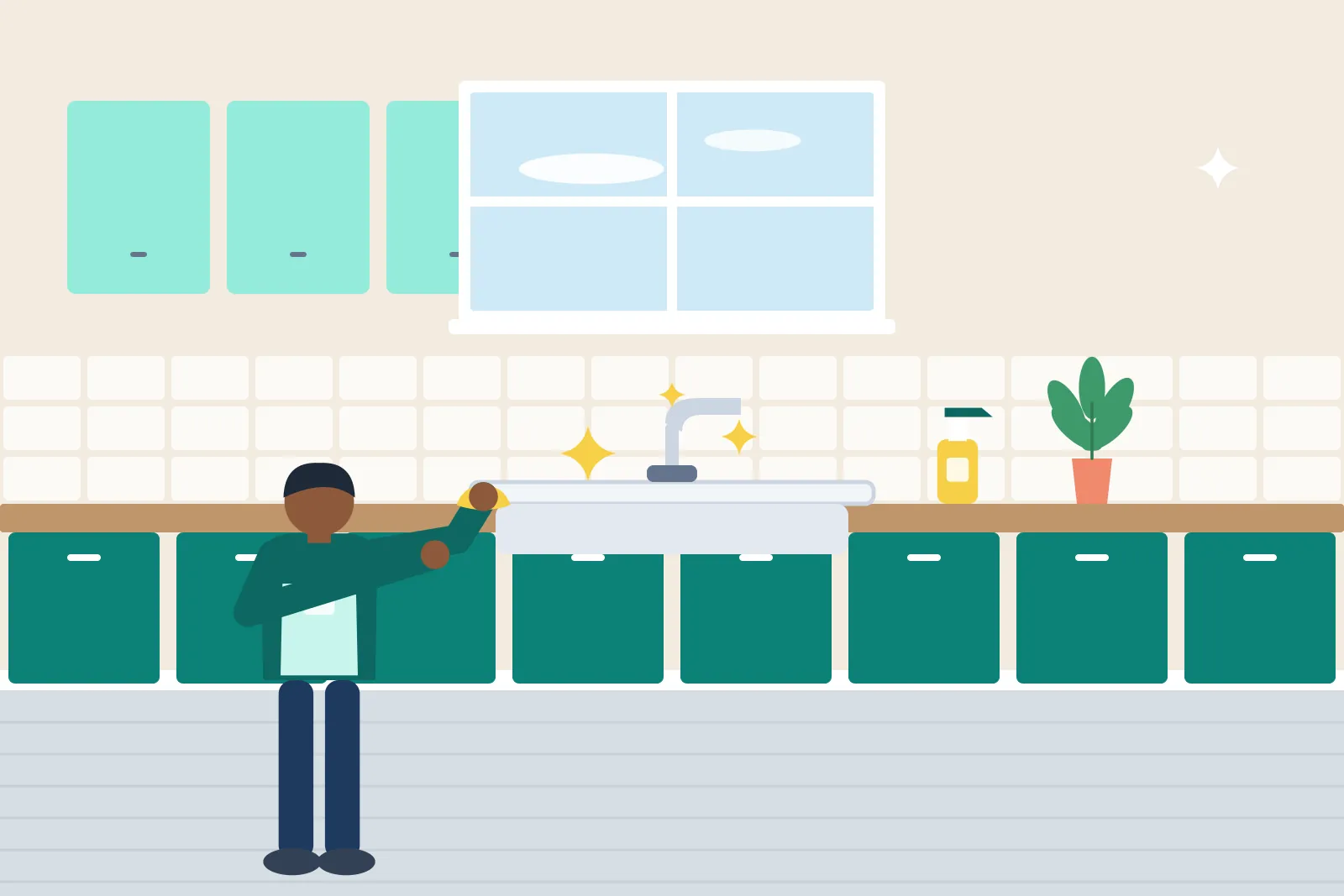
Most sink grime is easy to remove if it doesn't have time to set. After the last washing-up of the day, rinse out food debris, give the bowl and draining board a quick wipe with hot soapy water and dry the taps with a cloth. Drying is the step most people skip, and it's what stops water spots and limescale forming in hard-water areas.
Empty the plug strainer into the food waste caddy rather than rinsing debris down the drain. Fat, coffee grounds and rice are among the most common causes of slow kitchen drains.
Cleaning by sink material
Different sinks need slightly different treatment. Check the manufacturer's care guide if you still have it.
Stainless steel
Wash with warm water and washing-up liquid, then sprinkle bicarbonate of soda over the damp surface and rub with a soft sponge, following the direction of the grain. Rinse and dry. For water spots, wipe with a cloth dampened with diluted white vinegar, then rinse. Avoid wire wool and bleach-based creams, which can scratch or pit the surface; our stainless steel guide covers polishing in more detail.
Ceramic and Belfast sinks
Ceramic is hard-wearing but its glaze can be dulled by abrasives. Wash with warm soapy water, then use a paste of bicarbonate of soda for tea and coffee stains. Grey marks from pans scraping the surface often lift with a cream cleaner suitable for ceramic and a soft cloth. Don't leave cast-iron pans sitting in the sink – rust stains are difficult to remove.
Granite composite and quartz composite
Composite sinks are popular but show limescale and soap film as a pale bloom, especially on dark colours. Clean with washing-up liquid and a soft brush, rinse well and dry. Limescale responds to diluted white vinegar or a manufacturer's descaler left for a few minutes and then rinsed. Avoid bleach and strong alkaline cleaners unless the maker says they're safe.
The plughole, overflow and waste
The plughole is where smells start. Lift out the strainer basket and wash it in hot soapy water with a brush. Scrub around the rim of the waste, where a grey film builds up, and use a bottle brush or old toothbrush inside the overflow slot.
To freshen the drain, pour in a few tablespoons of bicarbonate of soda followed by a cup of white vinegar, leave it to fizz for ten minutes and flush with a kettle of hot (not boiling, if you have plastic pipes) water. It won't clear a real blockage, but it helps with mild odours. Our guide on getting rid of drain smells goes further.
Get quotes from local cleaners
Taps and the area behind the sink
Wipe the tap body, handles and spout with a soapy cloth, then rinse and buff dry. Limescale around the base of the tap and on the aerator is common in London, the South East and East Anglia; wrap the area in kitchen paper soaked in diluted vinegar for 20–30 minutes before wiping. Our limescale guide explains this step by step.
Don't forget the strip of worktop behind the sink and the silicone seal along its edge. Water sits there, and black mould spots appear on the sealant if it's never dried. Scrub the seal with a soft brush and a mould remover suitable for kitchens, rinse and dry. Sealant that stays black after cleaning usually needs replacing.
Disinfecting after raw meat
If you've rinsed raw chicken or meat packaging in the sink (food safety guidance says you shouldn't wash raw chicken at all), clean the sink and taps with hot soapy water first, then use a kitchen disinfectant or antibacterial spray following the label's contact time. Disinfectant doesn't work properly on a greasy surface, which is why the clean comes first – see cleaning vs disinfecting.
Wash or replace the dish cloth and sponge regularly. A damp sponge sitting next to the sink is one of the most germ-laden things in the house; our guide on cleaning mops, cloths and sponges explains how to keep them hygienic.
What a professional clean adds
A regular domestic cleaner will usually clean and shine the sink and taps every visit. In a deep clean or end of tenancy clean, cleaners also descale taps, clean the overflow and waste, degrease the splashback and check the sealant. If the sink looks dull even after cleaning, it may be worn rather than dirty – a fair-wear point worth knowing at a tenancy check-out.