Access methods
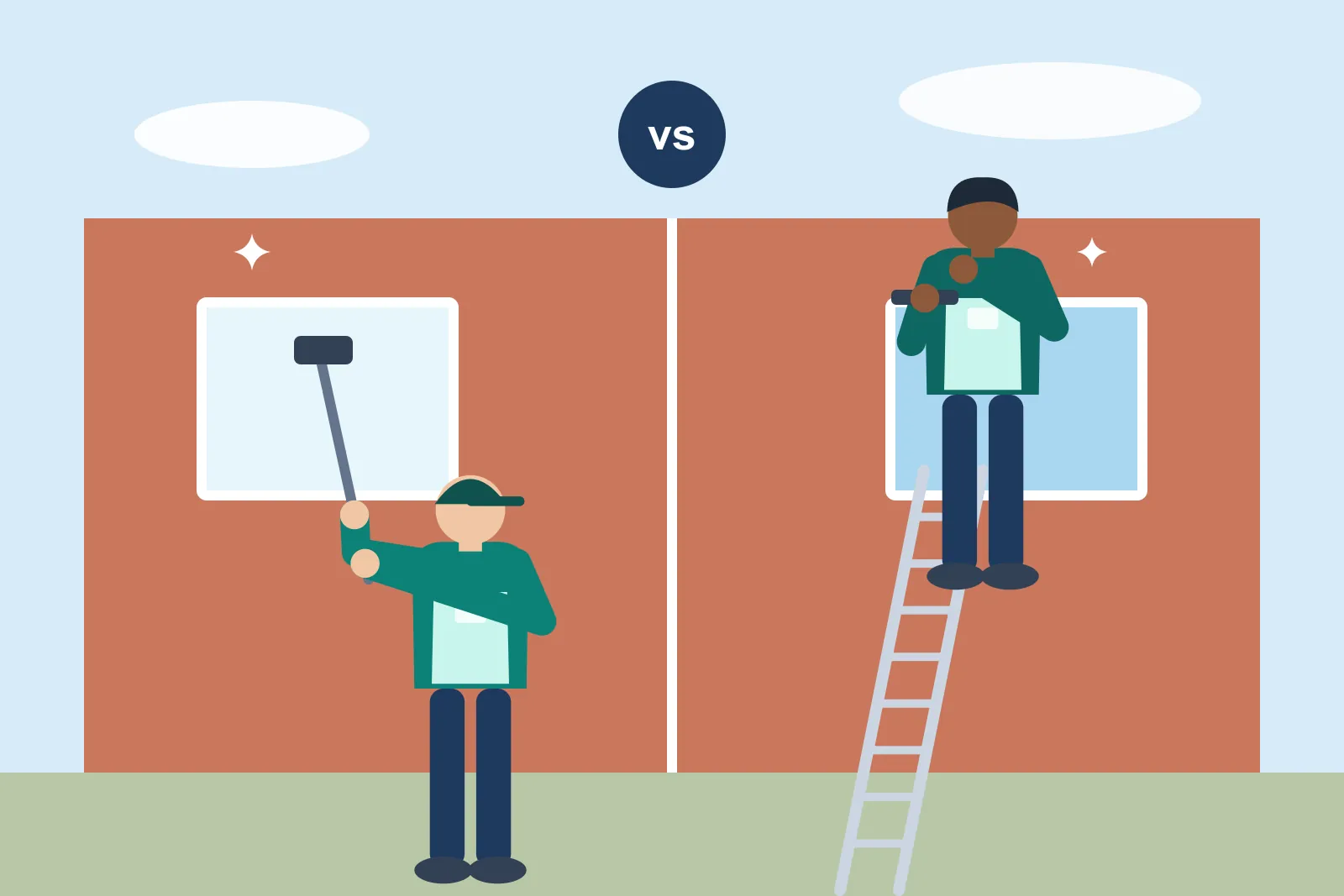
The building's height and design decide how windows can be cleaned:
| Method | Typical use |
|---|---|
| Traditional squeegee from the ground | Shopfronts and ground-floor glazing |
| Water-fed poles | Up to around four storeys from the ground |
| Mobile elevating work platforms (MEWPs) or cherry pickers | Mid-rise buildings, atriums, awkward access |
| Rope access | High-rise buildings and complex façades |
| Building maintenance units (cradles) | Tall buildings with permanent cradle systems |
Common access methods for commercial window cleaning.
Safety and the law
Window cleaning at height is covered by the Work at Height Regulations 2005, which require work at height to be avoided where possible, and otherwise properly planned with the right equipment and competent people. Water-fed poles have become standard partly because they allow cleaning from the ground. Rope access technicians should be trained and certified – IRATA certification is widely recognised – and MEWP operators should hold appropriate training cards.
As the client, ask for risk assessments and method statements, proof of training and insurance, and confirmation that any anchor points or cradle systems have been inspected and tested.
How often
Shopfronts on busy streets often need weekly or fortnightly cleaning. Offices commonly have external windows cleaned every four to twelve weeks at ground and low levels, and less often at height, where each clean is more expensive. Internal glass, partitions and glass doors are usually included in regular office cleaning. See how often windows should be cleaned.
What's usually included
Clarify the scope when you get quotes:
- External glass and frames
- Internal glass, if agreed – often less frequently than external
- Sills and ledges
- Signage and fascia panels, on request
- Gutters, cladding and canopies, usually as separate items
Get quotes from local cleaners
Cladding and façade cleaning
Many commercial buildings have cladding panels, curtain walling and signage that collect traffic film and streaks. Façade cleaning is a separate specialist service, often done annually alongside a window clean using the same access method, which reduces costs. Fascias and soffits on low-rise buildings can be cleaned with water-fed poles – see fascia and soffit cleaning.
Choosing a contractor
Look for experience with your type of building, appropriate access equipment and training, public liability insurance at a suitable level, and clear RAMS. For multi-site retailers, a contractor with national coverage keeps standards consistent. Compare the method, frequency and scope as well as the price. Our comparison of water-fed pole and traditional cleaning explains the methods, and you can request quotes through our window cleaning page. For the inside of the building, see office cleaning.
Contracts, scheduling and costs
Commercial window cleaning is usually agreed as a contract with a fixed price per visit and a schedule – for example, ground-floor glass every two weeks and upper floors every quarter. Prices depend mainly on access: work from the ground with water-fed poles is the cheapest, while rope access, cradles and MEWPs cost more because of the equipment, training and time involved. Combining window cleaning with cladding or signage cleaning on the same access visit usually saves money.
Agree in advance what happens in bad weather, how missed visits are rescheduled and how access to roofs, car parks and restricted areas will work. For multi-let buildings, check whether window cleaning is part of the landlord's service charge or each tenant's responsibility before booking.