What a professional oven clean involves
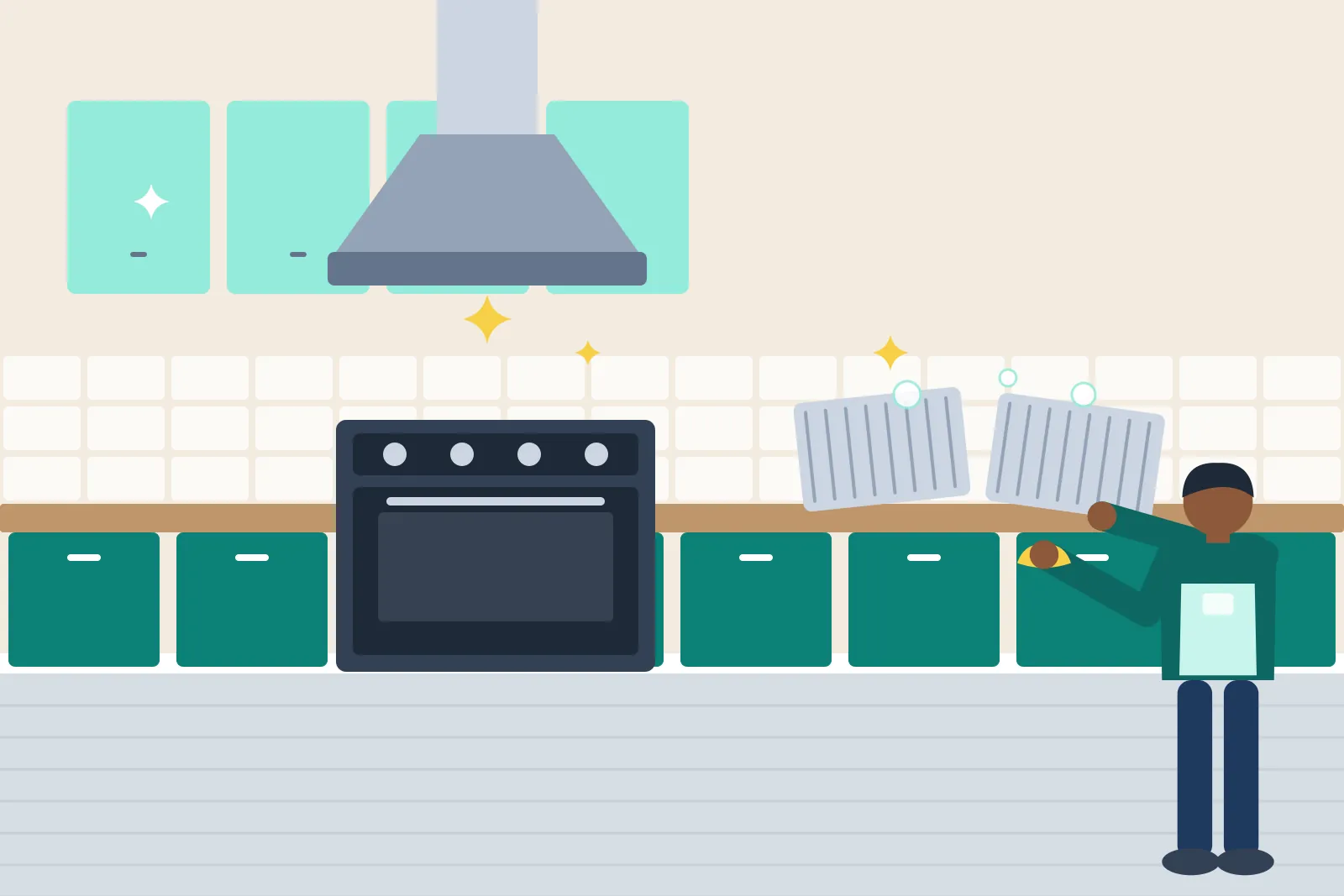
Most specialist oven cleaners follow a similar process. They protect the floor and worktops, then dismantle the oven as far as the model allows: shelves, runners, grill pan, side racks, and often the door glass, fan cover and fan blade. These parts go into a heated dip tank in the van or a portable tank in the kitchen, filled with a strong, usually caustic, cleaning solution that softens carbon and grease.
While the parts soak, the cleaner works on the oven cavity, door and seals by hand, using specialist non-caustic gels or pastes, scrapers and pads chosen for the type of enamel. The parts come out of the tank, are rinsed, scrubbed and dried, then refitted. The oven is checked and run briefly to make sure it works.
What's usually included
A standard oven clean commonly covers:
- Shelves, runners, grill pan and trivets
- Inside the oven cavity, including the roof and back panel
- Door glass, including between the panes where the door allows
- Door seals, hinges and the outside of the oven
- Fan cover and fan blade on fan ovens
- Control knobs and fascia
- Often extras: hob, extractor hood and filters, microwave and barbecue
How long it takes
A single oven usually takes around one and a half to two and a half hours, depending on its condition. Double ovens, range cookers and ovens with lots of removable parts take longer – range cookers can take three to five hours. Very heavy carbon build-up may need extra soaking time.
The kitchen is usable while the cleaner works, but you'll want to avoid cooking until it's finished.
What it costs
Oven cleaning is priced per appliance rather than by the hour. Indicative UK ranges are around £50–£85 for a single oven, £70–£120 for a double oven and £100–£160 for a range cooker, with hobs and extractors priced as add-ons. Prices are higher in London and for heavily soiled or unusual appliances. See our oven cleaning page and cleaning prices guide for current ranges and sources.
Many oven cleaners offer a discount for multiple appliances, and some end of tenancy companies include the oven in their fixed price.
Get quotes from local cleaners
How to prepare
Not much is needed. Empty the oven and grill of trays and dishes, clear the worktop next to it and make sure the cleaner can get to the plug or isolator switch. If you know the model or still have the manual, keep it handy – it helps with door glass removal. The oven should be cold, so don't cook in it beforehand.
Is it worth it?
It's particularly worth booking before moving out of a rented home (a dirty oven is one of the most common reasons for cleaning deductions – see deposit deductions for cleaning), before selling a house, when moving into a home with a neglected oven, or once a year if you cook a lot.
Compared with DIY, the main benefits are the finish – dip tanks remove carbon from racks and fan parts that hand cleaning rarely shifts – and avoiding hours of scrubbing and fumes. If your oven is only lightly soiled, our DIY oven cleaning guide may be all you need.
Choosing an oven cleaner
Ask how they clean (dip tank or hand only), which products they use, whether they're insured, and what's included in the price for your type of oven. Check reviews and before-and-after photos. Many work independently or as part of a franchise, and many end of tenancy and deep cleaning companies include oven cleaning themselves or subcontract it to a specialist.