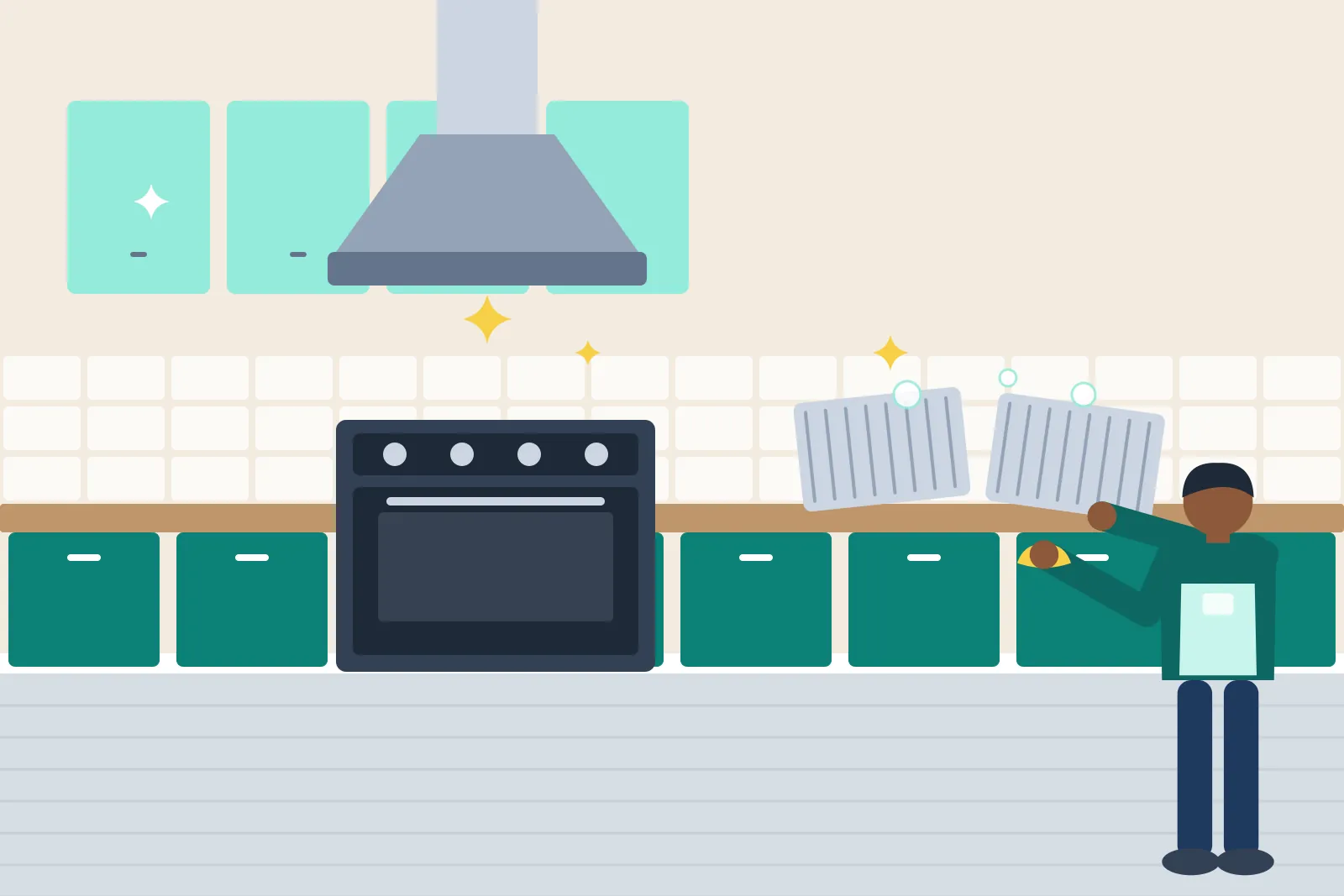
Work top to bottom, dry to wet
The order matters more than the products. Dust and crumbs fall, so start high and finish with the floor. Clear and declutter first, do the dry jobs (dusting, vacuuming crumbs from cupboards), then the wet ones. Leave the oven or anything that needs soaking to work while you do the rest.
Set aside a good half day for an average kitchen if you're doing it yourself. Professional deep cleans of kitchens often take a team several hours, which gives you an idea of the scale.
Before you start
A bit of preparation saves time:
- Empty the dish rack and clear the worktops completely
- Put the oven racks and extractor filters in to soak
- Run the dishwasher empty with a cleaner
- Open a window and put the bins out
High-level jobs
Start up high:
- Tops of wall cupboards – often thick with greasy dust
- Light fittings and the ceiling above the hob
- Extractor hood, inside and out
- Cobwebs in corners and around window frames
Cupboards and drawers
Take one cupboard at a time. Empty it, vacuum the crumbs, wipe inside with warm soapy water and dry before restocking. It's a good moment to throw out past-date food and spices that have lost their scent. Then clean cupboard doors and handles on the outside – grease builds up around the handles in particular.
Appliances
Each appliance has its own guide if you want the detail:
- Oven, racks and door glass – see how to clean an oven
- Hob and pan supports – see how to clean a hob
- Fridge and freezer – see how to clean a fridge
- Dishwasher filter and seals – see how to clean a dishwasher
- Microwave – heat a bowl of water with lemon slices for a few minutes, then wipe
- Kettle and toaster – descale the kettle and empty the toaster crumb tray
Tiles, splashbacks and walls
Degrease the splashback behind the hob, which often has a film you only notice once part of it is clean. Scrub grout lines with a soft brush. Wipe any marks from walls gently, testing a small area first – some wall finishes mark easily if scrubbed.
Get quotes from local cleaners
Sink and taps
Clean the sink, drainer and plughole, and descale taps if you're in a hard water area. Check under the sink too: it's a good time to clear out old products and wipe the cupboard base. For more on limescale, see how to remove limescale.
Worktops
Different surfaces need different care. Laminate copes with most mild cleaners; wood worktops need wiping with a barely damp cloth and occasional oiling; natural stone such as granite and marble should only be cleaned with pH-neutral products, as acids like vinegar and lemon can etch the surface; quartz composite is tough but can be damaged by harsh chemicals.
Floors and finishing touches
If you can, pull out the cooker, fridge and washing machine to clean behind and underneath – but only if they're on wheels or easily moved, and take care with connections. Vacuum or sweep, then mop, paying attention to the edges and the kickboards under the units. Finally, clean the bins inside and out, and wipe light switches and door handles.
A realistic timetable
If you're doing it yourself, a kitchen deep clean is easier split into chunks. Trying to do every job in one go is how half-finished kitchens happen.
| Session | Jobs | Rough time |
|---|---|---|
| Evening before | Soak oven racks and extractor filters; empty fridge before shop | 30 minutes |
| Session 1 | High-level dusting, cupboard tops, extractor hood, light fittings | 1 hour |
| Session 2 | Cupboards and drawers, inside and out | 1–2 hours |
| Session 3 | Oven, hob and appliances | 1–2 hours |
| Session 4 | Tiles, sink, worktops, floor and finishing touches | 1 hour |
Splitting a kitchen deep clean into manageable sessions
The products you actually need
You can do a whole kitchen deep clean with very little: washing-up liquid, bicarbonate of soda, a limescale remover if you're in a hard water area, an oven product suitable for your oven, microfibre cloths, a non-scratch scourer and a soft brush. A degreaser helps on very greasy surfaces, but test it first.
Read every label and use one product at a time, rinsing in between. Kitchens are full of different surfaces – stone, wood, stainless steel, glass, laminate – and a product that's perfect on one can damage another.
Doing it yourself or getting help
A full kitchen deep clean is hard, physical work. If you'd rather hand it over, a professional deep clean usually covers everything on this list, though ovens and inside appliances are sometimes priced as extras. See what's included in a deep clean and our deep cleaning prices.