Why clean inside your radiators
Most modern radiators are convectors: behind the flat front panel there are metal fins that heat the air passing through them. Those fins trap dust, pet hair and fluff, especially in bedrooms and living rooms. Every time the heating comes on, warm air carries some of that dust back into the room, which matters if anyone has asthma or allergies.
A thick layer of dust also has a slight insulating effect, and it's what causes the burnt-dust smell many homes notice when the heating is switched on in autumn. Cleaning before the heating season is a sensible habit – our autumn and winter cleaning guide includes it.
What you'll need
Nothing specialist, although a radiator brush helps:
- A long, thin radiator brush or a flexible duster
- A vacuum cleaner with a crevice tool and brush attachment
- An old towel or dust sheet to lay under the radiator
- A bucket of warm water with a little washing-up liquid and a cloth
- A hairdryer on a cool setting (optional, to blow out dust)
Step by step
Turn the heating off and let the radiator cool completely. Lay the towel along the floor beneath it to catch falling dust.
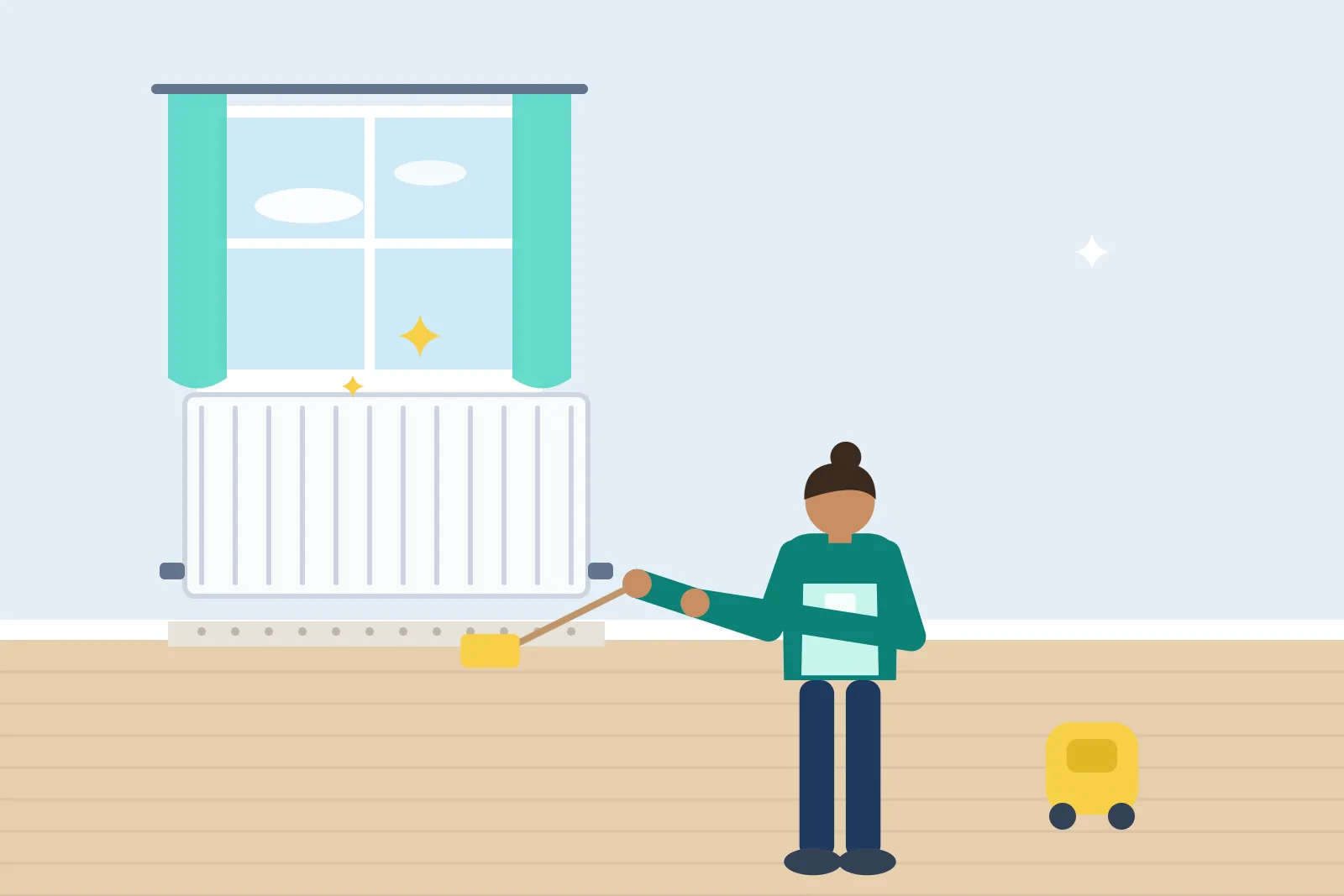
If your radiator has a top grille, it may lift off – many are simply clipped in place. Vacuum along the top and down into the fins with the crevice tool. Then slide the radiator brush down between the panels and fins, working from top to bottom. Dust falls onto the towel and the floor.
For stubborn dust between the panels, hold a damp towel behind or below the radiator and use a hairdryer on cool to blow from the top or the other side. Then vacuum the towel and floor, refit the grille and wipe the outside of the radiator with the warm soapy water. Dry it to prevent rust spots, especially on older steel radiators.
Behind the radiator and the wall above it
The gap behind a radiator collects dust, and so does the wall immediately above it, where convection currents carry dust upwards and leave a grey shadow. Use the brush or a long flexible duster behind the radiator and vacuum the skirting board beneath it.
Grey marks on the wall above usually come off with a barely damp microfibre cloth or a melamine sponge used gently. Test first – some wall finishes polish up or lose colour if rubbed hard. Regular dusting of the radiator reduces the marks.
Get quotes from local cleaners
Towel rails, column radiators and designer radiators
Heated towel rails in bathrooms collect limescale spots and soap splashes rather than dust. Wipe them with a damp cloth and a mild cleaner, then dry; avoid abrasives on chrome. Column radiators and cast-iron radiators have many grooves – a bottle brush or radiator brush gets between the columns. Designer radiators with matt finishes are best cleaned with a soft, dry cloth and only a little soapy water.
How often to clean radiators
Wipe the outside and dust the top whenever you dust the room. Clean inside the fins at least once a year, ideally before the heating season starts, and two or three times a year in homes with pets, smokers or allergy sufferers.
If a radiator is cold at the top but warm at the bottom, that's usually trapped air rather than dust – bleeding the radiator fixes it. If it's cold at the bottom, or several radiators are cold, that's a heating system issue for a qualified engineer rather than something cleaning will fix.
Radiators in a professional clean
Radiators are normally wiped as part of a regular clean, but cleaning inside the fins is more typical of a deep clean or end of tenancy clean. If you'd like it done, mention it when you ask for quotes so the cleaner allows time and brings a radiator brush. Our deep clean checklist lists other high-level and hidden areas that are usually included.