Why decking gets slippery
Decking in the UK spends much of the year damp. Algae, moss and a film of organic dirt build up in the grooves, particularly in shaded areas and where leaves are left to rot. That green film is what makes it so slippery. On timber, water also gets into the wood, causing grey weathering, black spots and eventually rot.
Cleaning in spring removes the winter's build-up; a second clean in autumn, after clearing leaves, stops it getting bad again.
Clear and sweep
Move furniture and planters off the deck. Sweep thoroughly with a stiff brush, along the boards rather than across them, and clear the gaps between boards with a putty knife or a dedicated decking gap tool. Blocked gaps hold water and leaves, which accelerates rot.
Cleaning timber decking
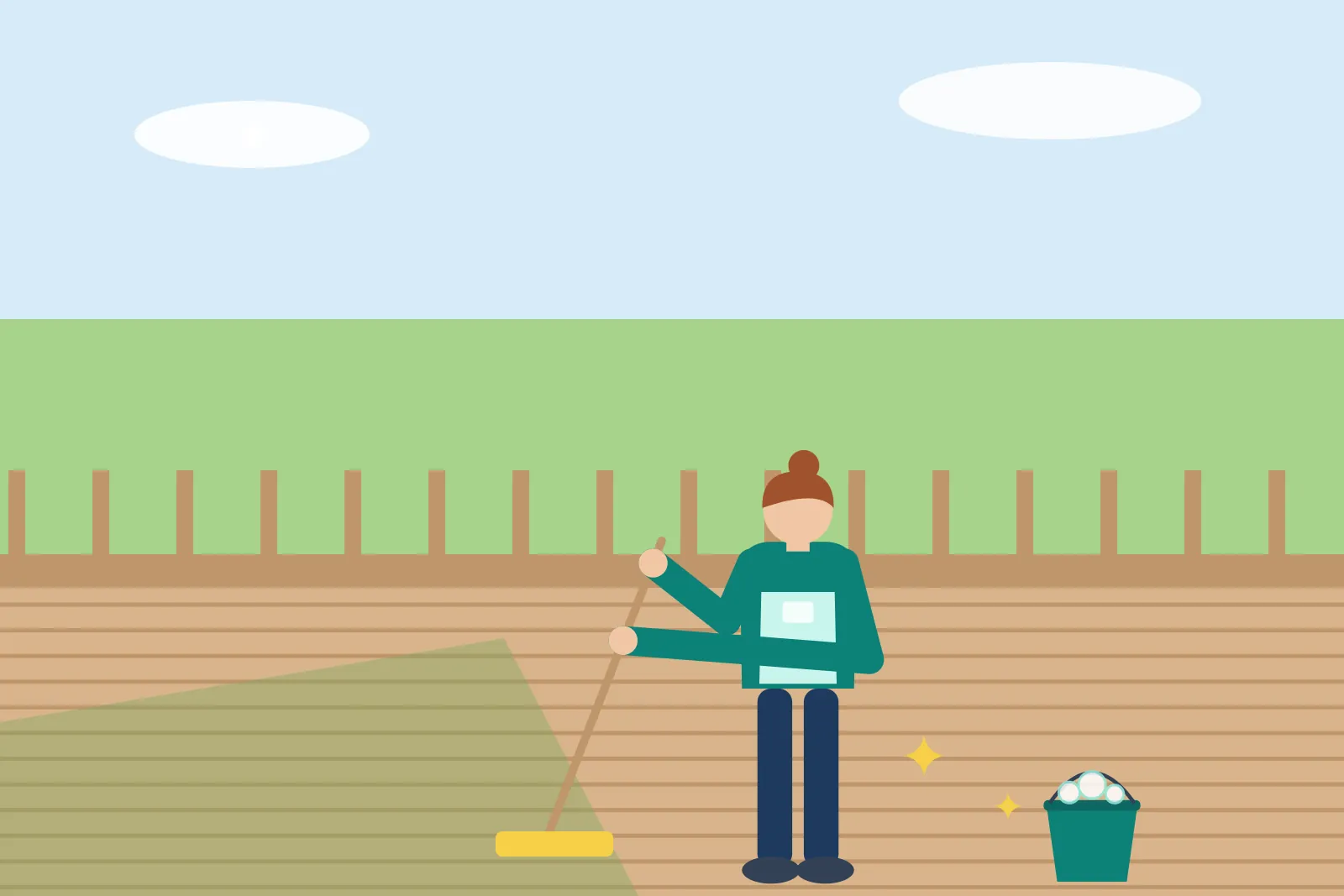
Use a decking cleaner designed to remove algae and grime from wood. Apply it to damp decking with a brush or garden sprayer, leave it for the time stated, scrub along the grain with a stiff deck brush, then rinse thoroughly with a hose. Most work best on a mild, overcast day.
A pressure washer can be used on timber, but carefully. A narrow jet held too close tears up the soft wood fibres, leaving a furry surface that holds more dirt and soaks up more water. Use a wide fan nozzle on a lower setting, keep it 30cm or so from the surface and move along the boards with the grain. Many decking specialists prefer brushes or rotary deck cleaner attachments for this reason.
Cleaning composite decking
Composite decking (a mix of wood fibre and plastic) doesn't rot or need oiling, but it still gets dirty and can grow algae in shade. Clean it with warm soapy water and a soft brush, or a composite decking cleaner recommended by the manufacturer. Check the manufacturer's guidance before pressure washing – some allow it on low settings, others advise against it or limit the pressure because it can damage the surface and void the warranty.
Grease spots from barbecues should be cleaned quickly with washing-up liquid and warm water, as oils can stain some composite boards.
Get quotes from local cleaners
Black spots and grey timber
Black spots on wooden decking are usually mould or mildew in the wood surface. A decking cleaner containing a mould treatment, or oxalic acid-based deck brighteners, can lighten them. Grey, weathered timber can be restored with a deck reviver or brightener, which removes the grey surface layer and returns some of the original colour – follow the instructions carefully and wear gloves and eye protection.
Protecting timber after cleaning
Once wooden decking is clean and thoroughly dry (usually after two or three dry days), apply a decking oil, stain or protective treatment if you want to keep the colour and repel water. Oils soak in and need reapplying every year or so; film-forming stains last longer but can peel and are harder to redo. Anti-slip decking treatments and anti-slip strips are worth considering for steps and shaded areas.
Safety on slippery decking
While the deck is still slippery, keep everyone safe:
- Treat the steps and the main walkway first
- Wear shoes with good grip, especially when using a pressure washer
- Keep children and pets off while cleaners are wet and until boards are dry
- Check for loose or rotten boards, raised screws and nails while cleaning
- Avoid using bleach, which harms plants and lawns next to the deck
Booking a decking clean
Exterior cleaning companies often clean decking alongside patios and driveways, and some offer oiling or staining as a follow-up visit once the wood has dried. Quotes are usually by area. Ask which method they'll use on your type of decking, whether it's suitable for composite boards and how long you'll need to keep off it. Hot tub owners with decking around the tub may find it worth having both cleaned at the same time – see how to clean a hot tub.